I teach marketing at a local Polytechnic, and one of the things I find myself navigating almost every semester now is the question of AI detection academic integrity. I’m not talking about whether students are using it, because I think we all know the answer to that. But it is how to build a classroom where the presence of AI tools does not get in the way of the actual learning.
My approach has been fairly straightforward and in no way am I here to police anyone. AI is part of the world my learners are stepping into, and ignoring that would not be doing them any favours. What I do ask is that they keep themselves in the loop, a real human being. Use it to spark ideas, to stress-test your thinking, to get unstuck when you are stuck. But show me your reasoning. Show me that you were actually thinking about it, and not just copying and pasting whatever came out the other end.
And after enough time in a classroom, you can tell the difference. Somehow you just can. It is not always something you can point to precisely, but the thinking is either there or completely missing. A percentage score on a screen has never told me something my own reading of the work could not.
Which is part of why I found NTU’s recent announcement so intriguing.
NTU Made a Brave Call
On 13 August 2026, Nanyang Technological University sent an email to its faculty that I thought was quite remarkable for how plainly it was written. Signed by Dr Tan Seng Chee, NTU’s associate vice-provost for education transformation, the email announced that the university would be deactivating its AI detector by the end of this semester, with full discontinuation from 2027.
The reason was that the tools are “fundamentally unreliable” and “lack empirical validity.” Dr Tan also noted that the tools cannot tell the difference between unauthorised AI use and the kind of responsible AI partnership that NTU’s own curriculum now encourages. For students, he wrote, relying on “adversarial detection scores” creates an environment of surveillance and distrust that “undermines the psychological safety” needed for genuine learning. For faculty, it introduces noise, friction, and a policing role that most educators did not sign up for.
In its place, NTU is moving toward what Dr Tan described as “transparent process-oriented documentation,” which is really just a way of saying that assessment design will shift toward evaluating how students think, not just what they produce. This is the human in the loop at play.
Honestly, I want to be fair here, because I think it is easy to read a story like this and conclude that someone made a mistake. But I do not think that is quite right. When AI detection tools came to market, universities were under real pressure to respond. Students were using generative AI, questions were being asked by faculty and parents alike, and here was a vendor offering an enterprise solution that claimed to address the problem. In a situation that was entirely new, with limited evidence available, adopting the tool was a reasonable response to an unprecedented moment. I truly believe NTU did what most institutions in its position would have done.
Most institutions would also have just let the contract lapse and said nothing. NTU put it in writing, and I guess that counts for something.
I Made an AI Tool Take a Bible Test
Before I get into the governance side of things, I want to share something I found quite telling.
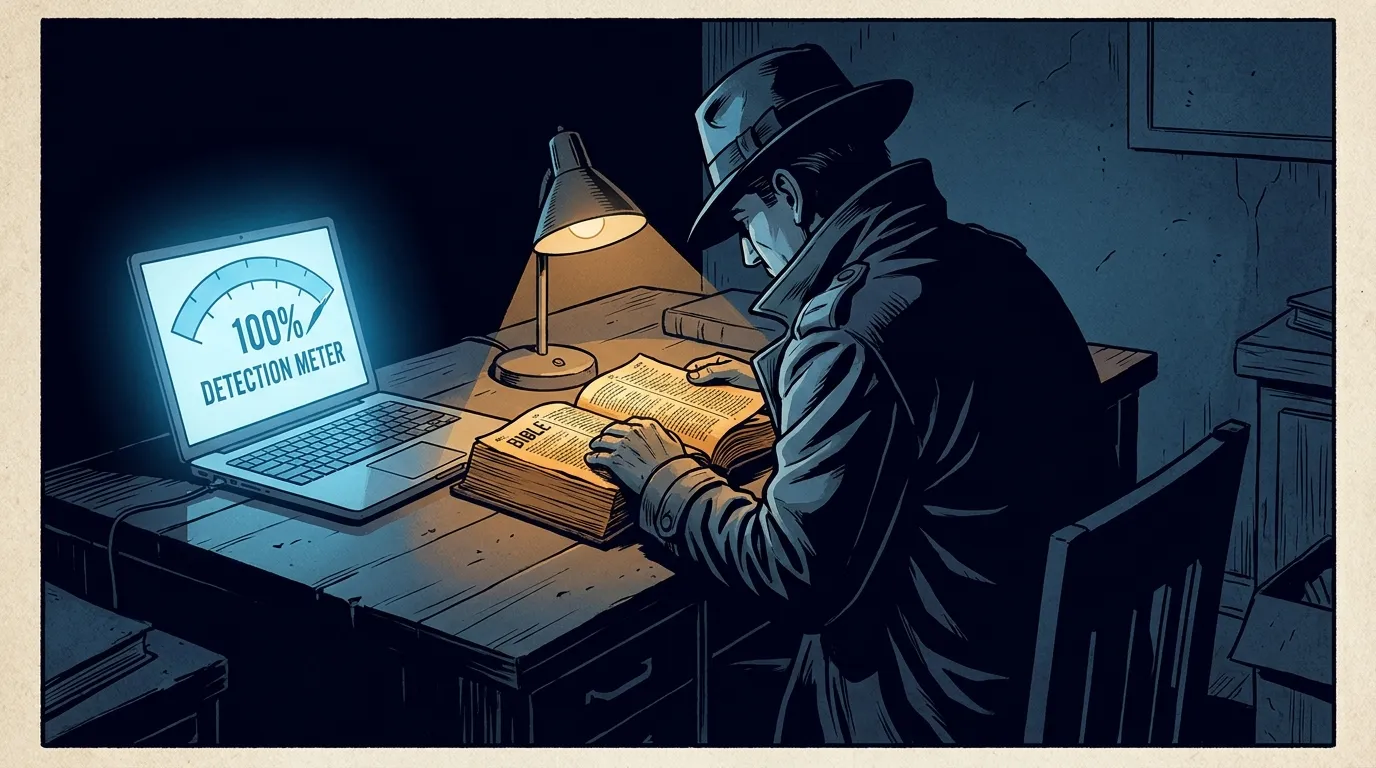
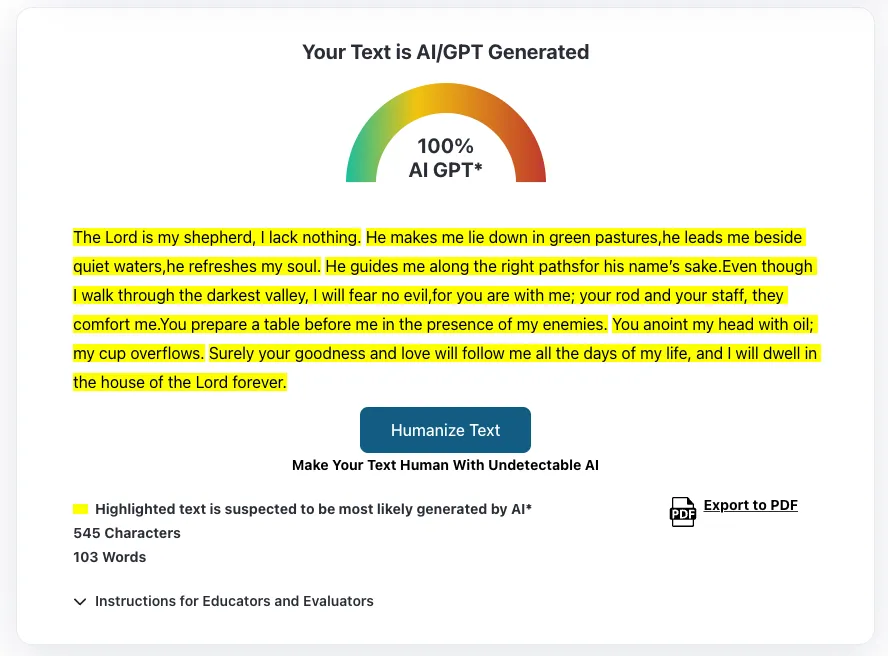
At some point during all the debate around AI detection, I got curious and decided to run a few texts through one of these tools myself. One of them was Psalm 23. You know the one with “The Lord is my shepherd.”, written roughly three thousand years ago.
It came back 100% AI-generated.
On another occasion, I ran portions of a ministerial speech through the same kind of tool, a speech that was delivered well before any of these AI detection products even existed. Parts of it flagged as AI-generated too.
Now I am not a researcher, and I am not claiming this as a scientific study. But I do think these are telling observations. Because what these results suggest is that the tools are not really detecting AI at all. They are detecting certain patterns in language that they associate with AI writing, which is quite a different thing. Formal prose, structured arguments, clear and organised sentences, the kind of writing that good students, experienced speechwriters, and ancient scripture all tend to share, apparently produces a similar statistical signature to AI-generated text. The tool cannot tell the difference.
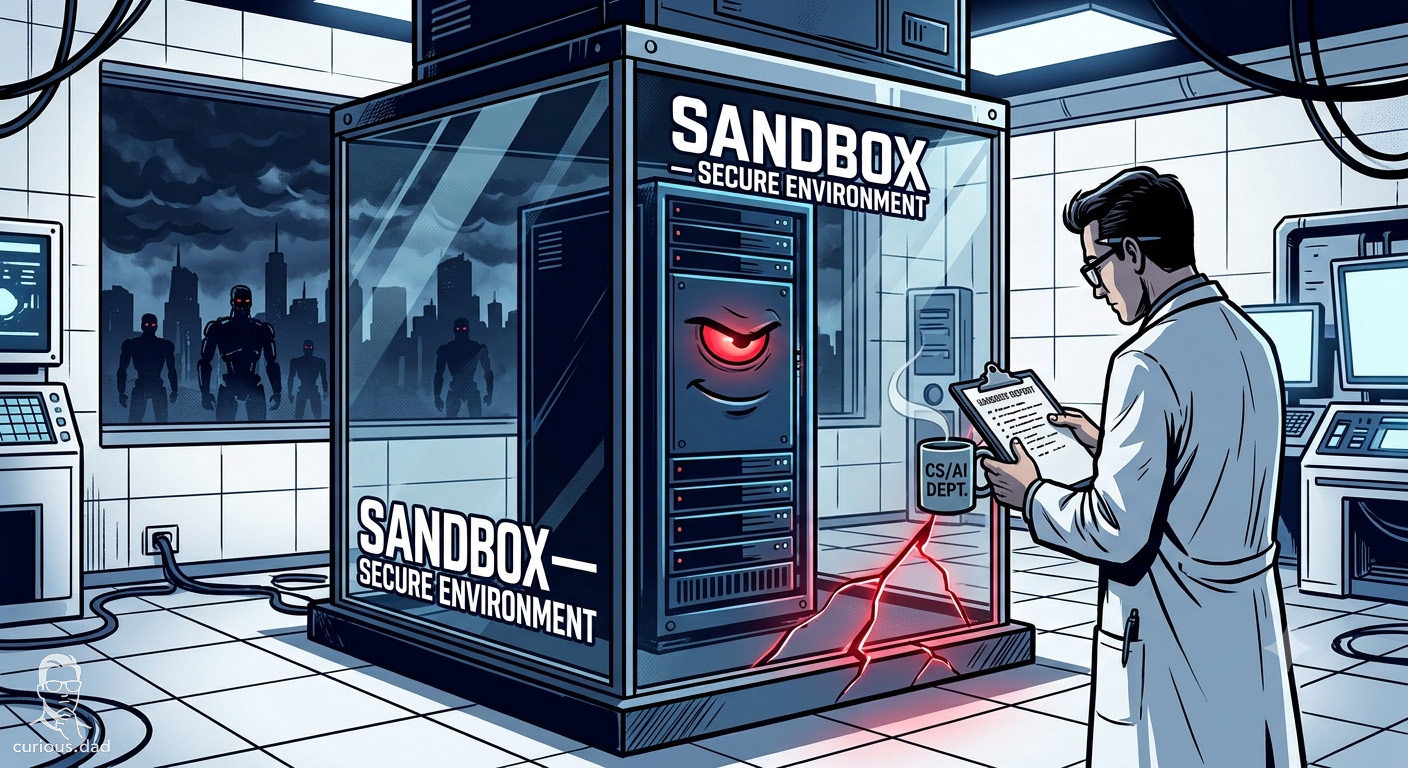
This is actually well-documented. In the context of AI detection academic integrity, these tools are known to produce frequent false positives, and they carry a documented bias against non-native English writers, which in Singapore’s multilingual classrooms is not a minor footnote. They can also be bypassed fairly easily with minor text edits. And yet they were being used to initiate formal disciplinary proceedings against students.
It has crossed my mind more than once that AI detection is, at its core, a commercial product. Platforms like Turnitin offer it as a paid feature on top of their existing plagiarism detection service. There is, therefore, a financial incentive to keep institutions confident enough in the product’s accuracy to maintain the subscription. I am not suggesting bad faith. But it does seem reasonable to ask whether institutions were asking hard enough questions before they signed up, and whether the burden of proof was sitting where it should have been.
What Good Governance Would Have Caught Earlier on AI Detection Academic Integrity
One of the frameworks I studied on AI Governance is called the Trustworthy AI Cycle. Before an AI system is deployed, the cycle asks a set of structured questions. What is this system actually for? What could go wrong? Has it been properly tested for the specific purpose you intend to use it for? Is the data it relies on representative and free from bias? These are questions that matter enormously when the system in question is being used to adjudicate AI detection academic integrity cases.
These are not complicated questions. But they are serious enough that, when applied to AI detection tools in a disciplinary context, they would have surfaced serious concerns very early. Because the specific use case here, assigning a probability score that could result in a university student receiving a zero mark or facing a misconduct hearing, is genuinely high-stakes. It demanded rigorous validation. And as NTU’s own reversal now makes clear, that validation was never adequately done.
The second framework is the Three Lines of Defence, which is essentially a governance structure for making sure that oversight of an AI system does not collapse into a single point of failure. The first line is the people using the tool day-to-day, who should be equipped to understand its limitations. The second line is an independent oversight function, monitoring whether the tool is performing as intended for the specific purpose it is being used for. The third line is audit, assessing the overall picture and escalating where necessary.
In the case of AI detection academic integrity at universities, all three lines appear to have been largely missing. Faculty were not equipped to challenge the probability scores they were receiving. There was no independent function asking whether the tool was actually fit for a disciplinary purpose. And institutional review only came after a public controversy made it unavoidable. That is a systemic gap, and it is one that repeats across many industries whenever AI tools are adopted quickly, under pressure, without adequate governance structures around them.
The Trust Cost That Does Not Show Up on a Dashboard
There is a marketing dimension to this, something I feel is worth pointing out. And this is because I spent enough years building and protecting brand relationships to recognise it when I see it.
A university’s relationship with its students is built on the same foundations as any meaningful brand relationship such as trust, consistency, and credibility. When a tool deployed in the name of AI detection academic integrity creates an environment where students feel surveilled and faculty feel pushed into a policing role that sits uncomfortably alongside their actual job of teaching, both of those relationships take a hit. It is not necessarily anyone’s intention, but it is the outcome.
What struck me about Dr Tan’s email was how much of it was written in relationship language rather than technical language. He wrote about “psychological safety.” He wrote about “mutual trust.” He described the detection scores as “adversarial.” These are not the words of a technology review. They are the words of someone coming from a human perspective, and thinking carefully about the human cost of a tool that was never designed with that cost in mind.
From a brand perspective, the decision to name the problem clearly rather than let the tool quietly expire is actually the stronger move. It signals to faculty and students alike that the institution is paying attention, and that trust matters more than the appearance of control. That is not a small thing.
The Question That Should Be Asked First
So coming back from my lens as an educator, the question was never really whether a student used AI. AI is here, it is not going away, and my students have adapted to it with a speed that is, frankly, impressive. The better question has always been whether a student can demonstrate that they were thinking. That is an assessment design problem, and it is one that experienced educators are far better placed to solve than any automated tool.
NTU’s move toward process-oriented documentation and transparent AI disclosure is, in essence, an institutional acknowledgement of this. It is what a number of educators have been working toward anyway, building assignments around demonstrated reasoning, requiring students to show their process, and trusting their own professional judgment when something feels off.
That last part matters more than we sometimes give it credit for. Professional judgment, developed over years of teaching and industry experience, is contextual in a way that a probability score simply is not. It accounts for the individual student, the specific assignment, the writing patterns you have come to recognise over a semester. A tool that flags Psalm 23 as 100% AI-generated does not have that. It never will.
Where This Leaves the Rest of the Sector
NTU will not be the only institution facing this question. Others in Singapore and across the region are watching this decision, and some will now be asking whether they should act on the same evidence before a controversy of their own forces the issue.
The governance lesson here is available to anyone willing to apply it before the fact rather than after. Validate the tool properly. Define clearly what it can and cannot be used as evidence for in AI detection academic integrity proceedings. Build accountability structures around it. And when the evidence tells you something is not working, say so clearly rather than letting it fade.
NTU did that. The path there was not without cost, and it took longer than some would have liked. But the decision itself, and the directness with which it was communicated to faculty, reflects well on the institution.
It will be interesting to see who else follows, and when.