
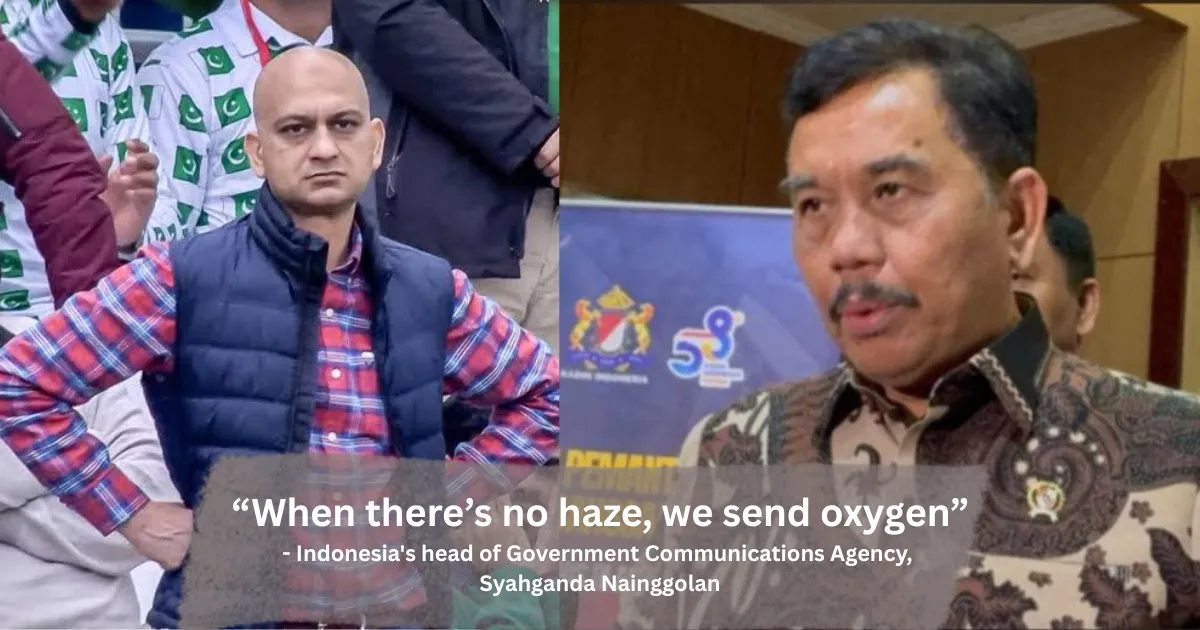
The Singapore Grand Prix has come and gone, and the haze continues to haunt us as we enter a new week. The skyline looks like a dream sequence from a movie that has overstayed its welcome, and the explanations from the authorities have been about as clear as the view. So when a line from Jakarta over the weekend suggested that Indonesia sends us oxygen whenever there is no haze, I wanted to check whether oxygen from forests actually works that way.
That line came from Syahganda Nainggolan, head of Indonesia’s Government Communications Agency, who told reporters on Saturday that Indonesia does not only send haze, because “When there’s no haze, we send oxygen,” as Mothership.SG reported, citing Kompas. He also suggested that the oxygen in Singapore and Malaysia comes from Indonesia’s forests. He was responding to concerns from Malaysia and Singapore, and the same report says Indonesian officials appreciated the offers of help, with Malaysia sending a delegate to talk to Jakarta.
What has been happening with the haze
For readers outside Southeast Asia, here is the short version. Fires on Indonesia’s islands of Sumatra, Borneo and Papua have blanketed parts of the region in smoke, and Indonesia regularly battles wildfires in the dry season, with experts also pointing to slash-and-burn land clearing. It is hardly new either. Singapore has had serious haze episodes in 1997 and 2013, and in September 2015 the index went above the very unhealthy range of 300, closing every primary and secondary school for a day. ASEAN members signed a regional haze agreement in 2002, although Indonesia only ratified it in 2014.
This year, Singapore’s air first slipped into the unhealthy range in early September, which means a PSI reading above 100, and it has drifted in and out of that range ever since.
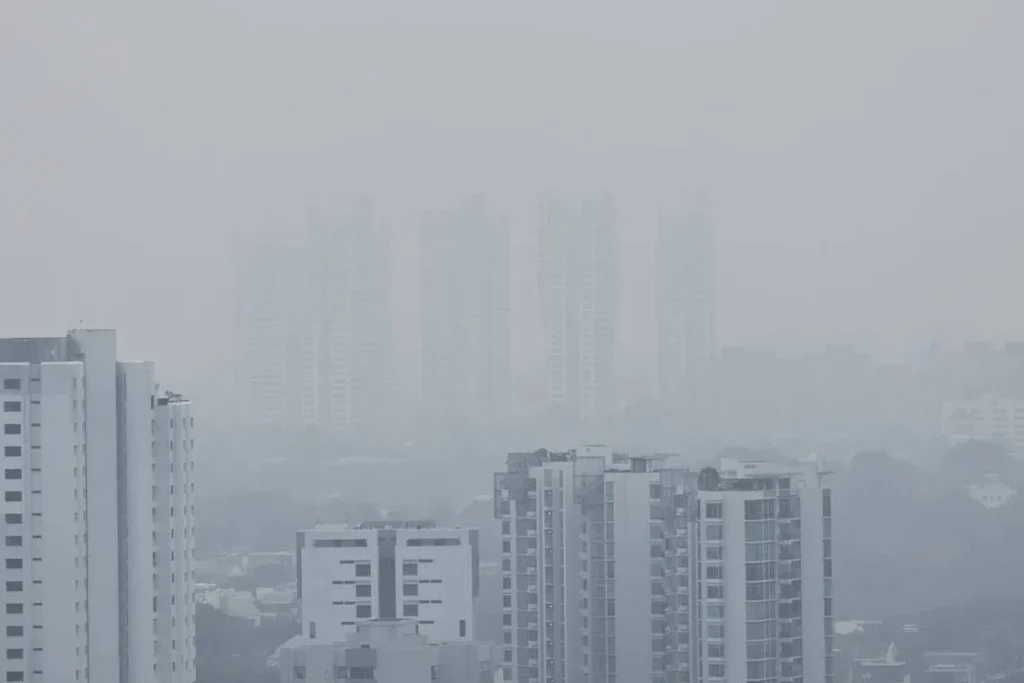
The backdrop is hard to ignore though, visually and nasally. The 24-hour PSI climbed as high as 192 on Friday, our air ranked the worst in the world on IQAir last week, schools in Johor are staying closed until 16 October, and N95 mask vending machines are on standby for eligible Singaporeans if the 24-hour PSI crosses 200.
The lungs of the earth line most of us grew up with
Like most people, I grew up hearing that rainforests are the lungs of the earth, a picture of oxygen from forests flowing out to the rest of the planet, with the Amazon supplying 20 per cent of the world’s oxygen. However, my mind kept dialling back to something I read or watched some time back, that the oceans do most of the work, so I went looking before writing a word.
The 20 per cent figure turns out to be a myth. National Geographic quotes Oxford ecologist Yadvinder Malhi, whose estimate puts the Amazon at about 9 per cent of the world’s yearly oxygen production once the oceans are counted, while climate scientist Jonathan Foley arrives at around 6 per cent. That is the Amazon alone, and the oceans on their own make about half of the world’s oxygen. These shares describe what gets produced, which is only half the picture, because what matters for the air we breathe is what is left after everything has been used up.
Where the oxygen in our air actually came from
Atmospheric scientist Scott Denning of Colorado State University, writing in The Conversation and reprinted by Scientific American, explains that tiny phytoplankton in the ocean generate half of the oxygen produced on Earth. He adds that nearly all of the breathable oxygen we have originated in the oceans, which sits awkwardly with the idea of oxygen from forests as our main supply.
Say a tiny sea plant makes 100 units of oxygen. When it dies and rots, or gets eaten, nearly all of that gets used up again, because breaking down plant matter takes oxygen. A 2003 review by David Catling of the University of Washington and Kevin Zahnle of NASA Ames puts it at 99.9 per cent. The tiny sliver left over stays in the air because a little of the dead matter, mostly in the ocean, gets buried in sediments before anything can break it down.
Over millions of years that sliver built up the oxygen in our air, which now makes up about 21 per cent of the atmosphere. Most of the remainder is nitrogen at about 78 per cent, with a little argon and traces of other gases. The same review puts the average time an oxygen molecule spends in the air and ocean at roughly 2.1 million years. Against a stockpile that old, oxygen from forests barely moves the needle.
Why oxygen from forests nets out close to zero
Trees do release oxygen while they photosynthesise in the day, and I had always pictured the animals using it up again. The bigger consumers are the trees themselves, which breathe oxygen in at night, and the countless microbes that use it to break down dead leaves, twigs and roots. National Geographic notes that trees take back a little over half of the oxygen they produce, and the rest is probably used up by those microbes.
That fits the 99.9 per cent figure, and Denning says the same about forests and all land plants, whose net oxygen production is very close to zero. So oxygen from forests is real in a narrow sense, since trees do release it, yet almost all of it gets used again.
You cannot post oxygen to one country
Now we come back to that quote which I have issues with. Oxygen makes up about 21 per cent of the atmosphere, and the average oxygen molecule hangs around for about two million years, which in my reading is plenty of time for the wind to shuffle it around the whole planet. Nothing in that picture picks out Singapore for delivery. Even if oxygen from forests were a net gain, meaning a forest ended up with extra oxygen left over, it would mix into the air everyone shares, so Indonesia could not send it to us in particular.
Denning also points out that the oxygen in our air is a huge stockpile built up over millions of years, and that burning every scrap of organic matter on Earth at once would use up less than 1 per cent of it. Singapore’s supply does not depend on any one forest. More to the point, nobody is worried about running out of oxygen, because the haze hurts us through the smoke we breathe in. Even if Indonesia did send us oxygen, it would be no excuse for the haze.
Quiet in the daytime does not excuse the noise at night
Suppose the claim were true anyway. It is a bit like a neighbour who blasts music at 2am and says “but it is nice and quiet during the day.” That may well be true, and it still does not make the noise at night okay. In the same way, oxygen from forests on the clear days would not cancel out the harm that arrives in the haze weeks. The harm comes from fine particles. Indonesia’s health ministry recorded more than 174,000 acute respiratory infections in fire-affected areas between August and 21 September, and pointed to pollutants such as PM2.5 in the smog.
Closer to home, doctors told CNA that poorer air quality can aggravate respiratory conditions, particularly for older people, young children, pregnant women and those with lung or heart conditions. A Duke-NUS and SGH study found that every 10-point rise in PM2.5 came with about 3 per cent more emergency visits for respiratory conditions. One caveat is that flu activity is also at its highest in 32 months, and the Communicable Diseases Agency says there is little evidence that haze makes influenza itself worse. Haze looks more like a trigger than the main cause, but it is still a harm.
Having spent years in communications, I recognise the move. It is short, vivid and slightly warm, and it changes the subject from the harm to the favour. A line like that travels easily, which is a good reason to check it before repeating it. I have written before about how communications can go wrong under pressure. Plus, I call bull on the statement.
What forests are actually for
None of this makes forests less important. Michael Coe of the Woods Hole Research Center, quoted by National Geographic, likens the Amazon to a giant air conditioner that cools the planet. The same article describes tropical forests, including those in Asia, as some of nature’s most powerful tools for limiting climate change, and credits the Amazon with stabilising rainfall across South America and sheltering the richest biodiversity on land.
So the case for protecting forests never needed oxygen from forests to hold up. Their real value is in the climate, the rain and the wildlife, which is all the more reason to protect them.
So what do we do with a good soundbite
Haze season will come and go, and so will the politics around it, which makes it handy to keep a few facts nearby for when a tidy line turns up. The oceans did most of the work behind the air we breathe, oxygen from forests largely breaks even, and no single forest posts its share to a single country. I find that comforting in a small way, although it does nothing for this week’s PSI.
A quick note before I go. I am not a scientist or a researcher, just a curious dad who read what credible sources on the web had to say. If any of this turns out to be otherwise, I am open to taking another look.
What is the last well-worn fact you checked and found was not quite right?