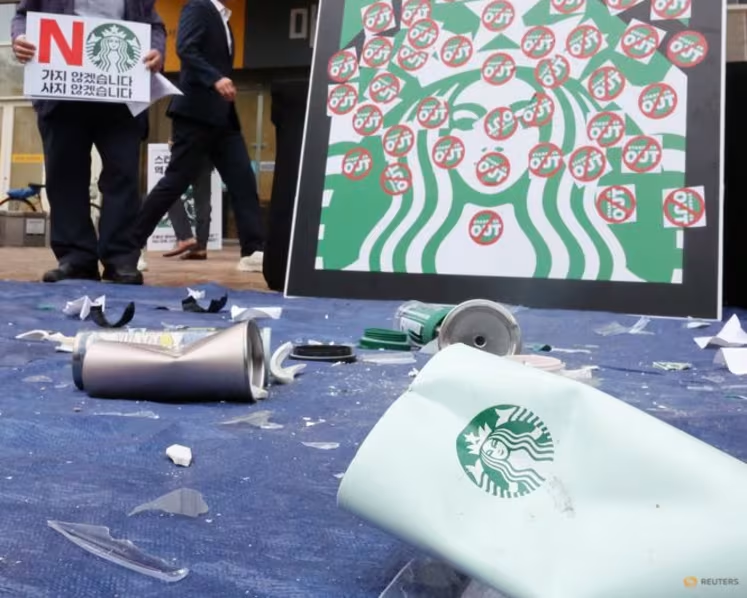
On the morning of 18 May 2026, Starbucks Korea launched what it had planned as a routine product promotion. The campaign was called “Tank Day,” built around a new line of stainless-steel tumblers the brand nicknamed the “SS Tank,” and the promotional copy urged customers to put the tumbler on the table “with a sound of tak.” The date “5/18” appeared prominently in the campaign materials. Within hours, it had become a national scandal, and before the day was out, the chief executive of Starbucks Korea had been fired. For anyone thinking about cultural intelligence in marketing, the incident is worthy of a case study.
It wasn’t so much as the market was unfamiliar or the brand was new to the country, but precisely because Starbucks had been operating in South Korea for 27 years and running more than 2,000 stores when it happened. The deeper the market presence, the harder it is to explain how cultural intelligence in marketing broke down so completely.
Why May 18 Is Not Just a Date
May 18 is the single most politically charged date on the South Korean calendar. In 1980, Chun Doo-hwan’s military dictatorship deployed troops, tanks and helicopters into the southwestern city of Gwangju to suppress a civilian uprising. Official records from the 1995 Seoul District Prosecutors’ Office put the confirmed death toll at 193, with 852 wounded, though researchers widely believe the true numbers are higher because records were suppressed under the Chun regime. The uprising remains the most symbolically loaded episode in South Korea’s modern democratic history, commemorated annually as a national day of remembrance.
The Tank Day campaign did not merely coincide with this date by accident, actually the promotional copy compounded it. The phrase urging customers to “thwack it on the table” is instantly recognisable to any Korean adult as an echo of the 1987 police cover-up following the torture and death of student activist Park Jong-chul, whose interrogators publicly claimed he had died suddenly after they “hit the desk with a thwack.” Two of the rawest wounds in South Korea’s authoritarian-era memory, activated simultaneously, by a routine tumbler promotion.
In marketing, we talk about the cultural environment as the forces that shape a society’s basic values, perceptions, and behaviours. The key distinction is between secondary cultural values, which shift over time and are open to influence, and core cultural values, which are reinforced across generations through families, schools, religious institutions, and government. The Gwangju Uprising sits as deeply inside the second category as any cultural touchstone gets. It has a public holiday, presidential acknowledgment, and living survivors. There was no ambiguity here, only an absence of someone in the approval chain who stopped to point out what the date meant.
The Numbers That Followed
SCK Company, the operator of Starbucks Korea, posted an operating loss of 18.4 billion won (approximately US$13 million) for the second quarter of 2026, compared with an operating profit of 40.3 billion won in the same quarter a year earlier and a profit of 29.3 billion won just three months prior. Net sales fell 6.1 percent to 747.3 billion won. It was the company’s first operating loss in 27 years of operations in South Korea.
The official explanation from parent company Emart attributed the decline primarily to the cancellation of the annual Summer e-Frequency promotion in June, a loyalty-driven seasonal campaign that typically brings customers back for repeat beverage purchases to earn limited merchandise. The controversy and the boycott calls that followed were not cited directly as causal factors in the investor materials. Either way, the two damages arrived together and compounded each other. Pulling the summer promotion was probably the right call from a tone standpoint, and it also had a very real cost.
The damage did not stop at Starbucks Korea. Emart, the parent conglomerate, posted a consolidated operating loss of 43 billion won for the quarter, even though its own businesses were performing well. Traders, Emart’s warehouse-style chain, grew second-quarter operating profit 12.7 percent year-on-year, and Emart Everyday’s operating profit climbed 51.7 percent. Those gains were not enough. The Starbucks Korea loss was large enough on its own to pull the entire group into the red, which means a tumbler campaign on the wrong date went beyond hurting a coffee brand. It dragged a retail conglomerate into a loss quarter.
Brand Equity and the Dimension That Matters Most
In marketing, brand equity is defined across four dimensions — differentiation, relevance, knowledge, and esteem, with esteem referring to how highly consumers regard and respect a brand. In my experience, esteem is the most load-bearing of the four, because the other three can’t really hold a brand up when it collapses.
Starbucks Korea had built genuine equity across all four dimensions over nearly three decades. South Korea is Starbucks’ largest market outside the US and China, which tells you something about the depth of penetration and consumer affection the brand had accumulated over time. That kind of position is more than just good coffee alone. It comes from consistent experience, consistent messaging, and consistent cultural presence built year after year.
The Tank Day incident shows that brand equity, built over decades, can be punctured in a morning, and that cultural intelligence in marketing is part of what protects it. The more instructive lens here is customer equity, which is the total combined lifetime value of all current and future customers. Losing consumer trust is not one lost transaction. It is the forward stream of every customer who chooses to walk past a store instead of into one.
When boycotts run alongside a cancelled loyalty promotion, you are losing both immediate traffic and the compounding value of the ongoing customer relationships those promotions were designed to deepen. The 58.7 billion won year-on-year reversal in operating performance is the price tag on that.
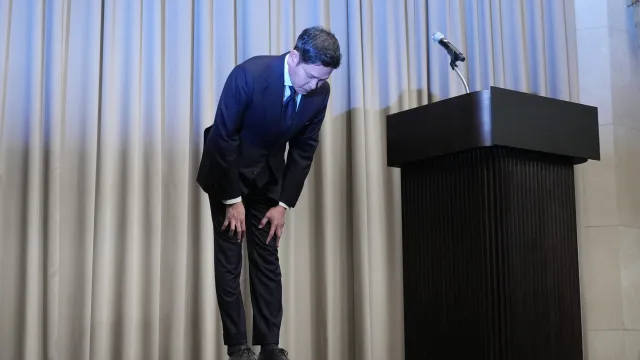
Brand equity can be rebuilt, but it requires time, consistency, and actions that match the scale of the offence. The Shinsegae Group chairman bowed three times in a televised apology. All 2,000-plus stores closed early on 22 June for mandatory historical awareness and social sensitivity training for the entire workforce, the first nationwide early closure since the brand launched in the country in 1999. Police raided the corporate headquarters following criminal complaints from victims’ families.
South Korea’s Interior and Safety Minister declared Starbucks products would no longer be used at government events, and President Lee Jae Myung called the campaign the act of a “degenerate peddler” and said he was “enraged.” Each of those responses was symbolically significant, and none of them restored Q2 revenue.
The Approval Process and Where It Broke Down
The campaign had a name, a tagline, promotional copy, a launch date, and materials with “5/18” displayed prominently. Reports indicate it passed through four to five layers of internal approval without being flagged. AI tools reportedly assisted in generating the campaign language, though SCK attributed the campaign to its marketing team rather than to any automated system.
Integrated marketing communications requires that all customer touchpoints are carefully coordinated to deliver a clear, consistent, and compelling message. Part of that coordination is the review infrastructure that exists to catch problems before they go live, something the process failed to carry out. The cultural knowledge was available, and the date was not obscure.
The connection between military tanks, a phrase about slamming a table, and 18 May was not something that required specialist research to surface. It required someone with basic cultural context to be part of the sign-off process, and that person was apparently not there. That is where cultural intelligence in marketing has to live, which is inside the approval chain and not outside it.
There is a broader point here in the context of AI governance. When AI assists in generating copy, it can produce language quickly and fluently. What it does not supply is the lived cultural knowledge that makes a human reviewer pause and ask what a particular phrase means in a particular place at a particular time. That is a human function, and it has to be built into the approval process deliberately. At Starbucks Korea, it seemed to be missing.
What Cultural Intelligence in Marketing Actually Costs When It Fails
I have spent a significant part of my career working across markets in Asia, and one thing that becomes clear fairly quickly is that cultural intelligence in marketing is a risk management function. Every regional campaign carries the same basic question, and it is a simple one. Does someone in the room know this market well enough to know what we should not do here?
The Starbucks Korea case is instructive precisely because it does not involve a small or unfamiliar market. South Korea has over 2,000 Starbucks locations and has been a core market for 27 years. A deeply embedded brand failed to apply cultural intelligence at the most basic level, across the calendar, the copy, and the sign-off process.
For anyone running campaigns across multiple markets in Southeast Asia or the broader Asia-Pacific region, the practical implication is fairly direct. Cultural review cannot be an afterthought or something absorbed into a generic global approval process. It requires a person with genuine knowledge of the market and the authority to flag and halt before anything goes live, and that role has to be a genuine gate.
The Starbucks Korea result carries a specific price. A 58.7 billion won swing in a single quarter, the first operating loss in 27 years, a fired chief executive, a police raid, and a presidential rebuke. Cultural intelligence in marketing does not come cheap when it fails, and the argument for building it properly is at least as financial as it is ethical.
What is your organisation doing to make cultural review a structured part of the campaign approval process? I would be interested to hear how teams are approaching this, particularly those operating across multiple markets in the region.
A note added after publication
A reader, Matt Slonim, who left a comment on my LinkedIn post linking to this piece, has written a detailed analysis on his Substack, Words with Bones, that offers a very different reading of what actually happened at Starbucks Korea. Drawing on Korean-language sources and Korean internet culture, he makes a compelling case that the campaign was far from an accident, and that the internal audit’s AI and oversight explanation may have served as convenient cover for something more deliberate.
I would encourage you to read his piece alongside this one.