

It still sat in my core memory, sitting in my cubicle at FOX, I watched a sizzle reel the production team had put together. It ran through everything the network had built over the years, and one segment stuck with me longer than the rest, a rundown of the graphics technology FOX had pioneered for football and hockey broadcasts. At the time I filed it away as a really impressive production trivia and how it helped sports viewing on TV. That memory resurfaced recently, watching ESPN’s new AI bluff detector at this year’s World Series of Poker.
The tournament was back on ESPN for the first time since 2021, and the broadcast came with that piece of technology built specifically for it. Built by independent engineer Luke Geel and deployed through Peyton Manning’s Omaha Productions, it analyses a player’s face on screen, blink rate, eye gaze, the symmetry of a smile, and flags moments when they are likely bluffing or sitting on the best hand at the table. It is the kind of story that gets covered as a curiosity. I think it is better understood as the newest entry in a much older lineage, and that lineage is where the more interesting lesson sits.
Graphics were never just decoration
FOX’s history with sports graphics goes back further than most viewers realise. When FOX broadcast NFL games for the first time in 1994, it introduced the FoxBox, a continuous score and clock display sitting in the corner of the screen. Nothing like it had appeared on an NFL broadcast before. It was not universally welcomed. Variety called it “that annoying see-through clock and score graphic,” and the man behind it, FOX Sports president David Hill, took plenty of heat for it at the time.
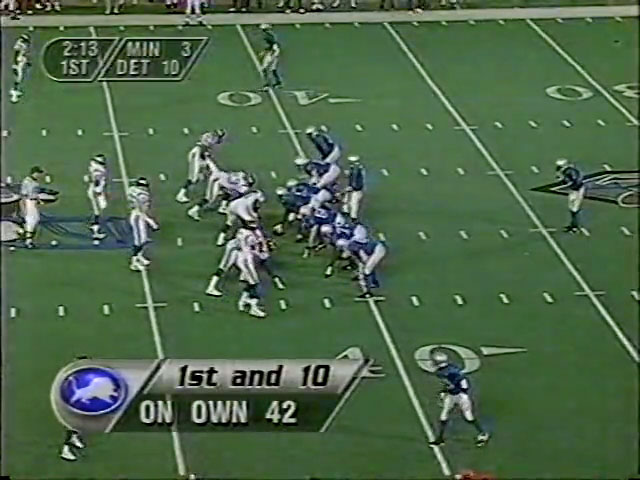
Two years later, in 1996, FOX carried the same idea into two different sports at once. When it began broadcasting Major League Baseball that June, it brought the same permanent scorebug to a sport where most telecasts still had no persistent on-screen score at all, a small change that made it far easier for a viewer flipping past a game to see the count and the inning without waiting for the broadcast to cut back to it.
That same year, FOX did it again for hockey. The FoxTrax glowing puck, used from the 1996 NHL All-Star Game through the 1998 Stanley Cup Final, added a blue glow and motion trail to help viewers track a puck moving too fast for the eye to follow on television. Hockey purists hated it. The puck’s own chief engineer later said surveys at the time came back close to fifty-fifty, with the split falling exactly where you would expect, longtime fans hated it, newer viewers were far more receptive, which tells you who the graphic was actually built for.
The piece of on-screen graphics that ended up mattering most, though, came from the other network I spent some time at. The yellow first down line debuted on ESPN in September 1998, built by a company called Sportvision, and within a few seasons it was standard on nearly every football broadcast in the country. FOX opened the door. ESPN built the piece that stuck.
What connects all four is the same underlying decision. None of these were built for the fan who already understood the sport. They were built to shrink the distance between a casual viewer and the game itself, to turn things a lifelong fan tracks instinctively into something anyone glancing at the screen could follow in a second. Every one of them was mocked at launch and every one of them became invisible furniture within a few years, which is usually the sign that a piece of innovation did its job properly.
The AI bluff detector doesn’t show what happened, it guesses what is coming
Set against that history, the AI bluff detector looks at first like more of the same. It is not. Every graphic before it displayed a fact. The score. The down and distance. Where the puck actually was on the ice. This one displays a guess about what a person is feeling before anyone at the table knows the outcome.
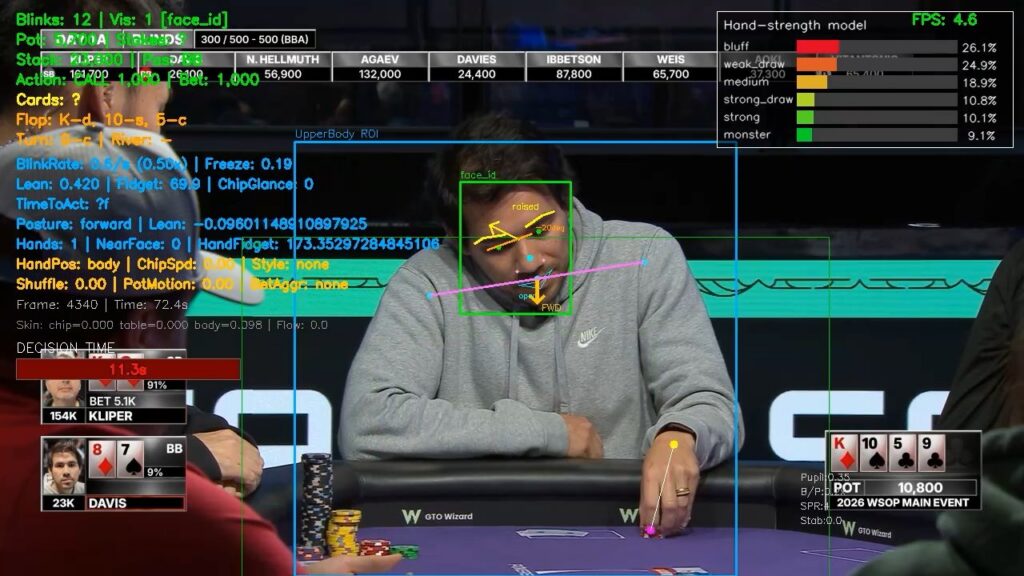
That is a meaningfully different job for a broadcast graphic to do. The 2026 Main Event drew 9,208 entries, the fourth largest field in the tournament’s history, building an $85.6 million prize pool with a $10 million top prize. A field that size, back on national television for the first time in five years, is exactly the moment a network reaches for something that gets people talking. Reading intention rather than reporting information is a different category of tool, and worth naming as one rather than filing it next to the first down line as more of the same steady march of broadcast innovation.
The guardrail is the actual story
For that reason, the more interesting decision in this whole story is not the AI itself, it is the restriction Omaha Productions put around it. The system is only applied to players once they have already been eliminated from the tournament, which keeps it from ever influencing a hand still being played. Nobody needed an integrity rule to tell viewers it was third and four like in football. Once a graphic starts making claims about what is going on inside someone’s head, that kind of guardrail stops being a nice-to-have and becomes the thing that keeps the whole idea credible instead of gimmicky.
It is the same question I kept circling when I wrote about Samsung’s AI governance arc, how much of what a technology can do should actually reach an audience before it has been tested against restraint.
Geel himself has been candid about the limits of what he built, noting that a player like Daniel Negreanu has likely spent years training the very tells the model looks for out of his game entirely. Poker media has been less generous. PokerScout called the tool “a solution in search of a problem,” arguing that board composition and mathematics matter far more to the outcome of a hand than a fleeting facial cue, which can just as easily be manufactured as genuine.
Omaha’s own Dan Gati has said the ambition is to help poker find its way back to appointment television the way it did during the global poker boom known as the Moneymaker era. Whether one piece of AI can do that is a separate question from whether it was built responsibly, and on that second question, at least, the eliminated-players-only rule is the right call.
Where I land
It brings me back to that sizzle reel. What looked like a highlight of clever production work was really a highlight of a marketing decision made over and over again, use technology to make the invisible visible, and make a niche audience sport legible to everyone else. The WSOP’s AI bluff detector is the same instinct applied to something broadcast graphics have never touched before, a person’s intentions rather than the state of the game. That is worth watching carefully, not because the technology is unwelcome, but because the line between clarifying a game and editorialising about the people playing it is thinner than it looks.
I would love to hear how others watching this year’s WSOP are reading it.