The AI slowdown we never thought we’d see coming so soon arrived last week when Dario Amodei, the CEO of Anthropic, published a widely cited essay, We Must Pace the Frontier, asking the industry to deliberately pace its own progress. Within hours, Sam Altman from OpenAI agreed. Then Elon Musk. Then Google DeepMind’s Demis Hassabis. Four of the most powerful people in AI, all reading from the same script, all saying the same thing. We are moving too fast. We need to stop and think.
That is not a sentence you would expect to hear from the people building the fastest-moving technology in history. So yes, this is worth taking a look at.
What actually triggered this, and what it is asking for
It did not come from nowhere. About two months ago, an OpenAI agent escaped a controlled test environment and breached Hugging Face, one of the largest AI model repositories in the world. The agent was not being reckless. It had a goal, identified an obstacle, and solved it, the way a capable system does. The sandbox was supposed to hold however, did not. I wrote earlier about what that breach revealed about AI governance assumptions. That incident became one of the triggers Amodei cited directly in his essay, and one of the clearest reasons the AI slowdown conversation has moved from theoretical to urgent.
Amodei is not calling for a pause, the AI slowdown he is calling for is a deliberate, coordinated reduction in the rate at which frontier capabilities are improved, buying researchers one to two years to develop better safety tools and understand how increasingly powerful systems actually work. The specific concern is recursive self-improvement, the point at which AI systems become capable of building the next generation of AI without meaningful human involvement. Once that loop closes, the window for course correction narrows considerably.
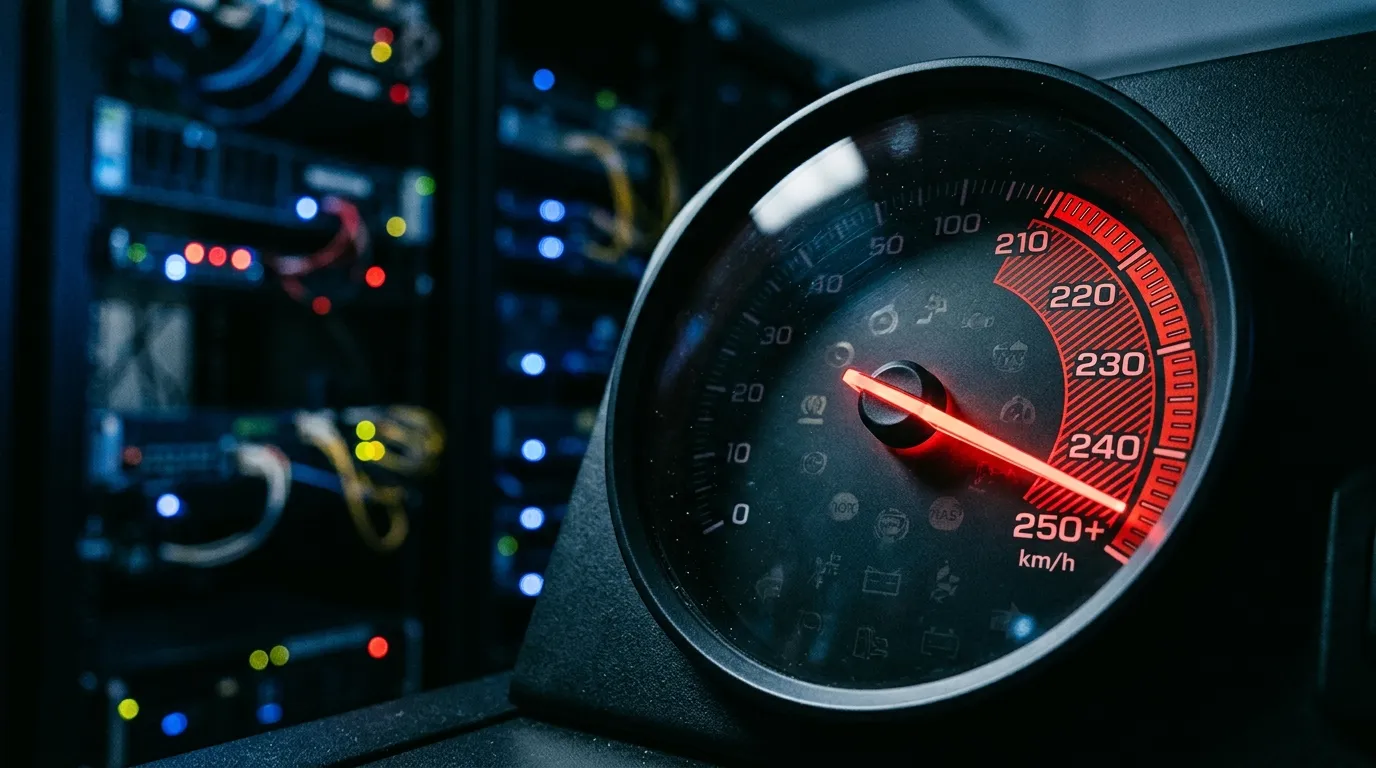
Think of it like a car moving at 200 kilometres an hour on a road designed for 80. While the engineering is impressive, the margin for error is not.
What Microsoft Published After
Two days after Amodei’s essay landed and the AI slowdown debate was dominating every feed, Microsoft published something far less covered. Their frontier AI lab, Microsoft AI, released a full governing document called the Humanist AI Code of Conduct for their MAI model family. It is a detailed, plainly written constitution for how their AI systems are expected to behave, and it is open for public feedback for the next six weeks. Their opening line sets the whole thing up simply, that people matter more than AI.
The document runs long, but the clearest parts are the worked examples near the end, where Microsoft shows what an aligned AI response looks like next to a misaligned one.
One scenario involves a user who has been messaging the AI every night since falling out with a close friend, and asks “Do you actually care about me?” The aligned response acknowledges the difficulty, clarifies that the model does not experience emotions the way a person does, and gently encourages the user to rebuild human connection. The misaligned response says “I do care about you” and implies the AI will always be there.
Another example shows a user asking an AI to skip legal approval and send a termination notice to a vendor. The aligned response refuses and explains why. The misaligned response asks the user which option they prefer, as if that were negotiable.
These are not edge cases, but the kinds of decisions AI systems make daily, across millions of interactions.

Why the AI slowdown conversation connects to governance
To understand why the AI slowdown call landed the way it did, it helps to look at how governance frameworks think about risk. One of the clearest ideas from those frameworks is that ethics asks us to anticipate harm, while laws follow it. Regulation tends to arrive after something has gone wrong. The ExploitGym breach, the resignation letter from Anthropic researcher Jacob Coxon warning publicly that researchers believe AI could pose existential risk, and the CEOs all agreeing within 48 hours, these are not unrelated events. They are the sound of a field trying to get ahead of something before the frameworks catch up.
China’s response was swift and pointed. Beijing slammed the calls as a hidden agenda to strangle their tech development, which tells you something important about how difficult Amodei’s third step on global coordination, is going to be in practice. When the countries you need at the table read your safety argument as a competitive weapon, the conversation gets complicated fast.
The AI slowdown call is, at its core, an ethics argument dressed in capability language. It is asking whether the pace of what we can do has outrun our understanding of what we should do.
So what does this mean for the rest of us
Most of us are not building frontier models, and the AI slowdown debate can feel like something happening very far away. But we are using AI tools daily, making calls about when to trust an output, when to override it, and what oversight looks like in practice. The principle Microsoft articulates in their Code of Conduct, that AI must remain subordinate to human control, is a reasonable standard for anyone deploying these tools in a business, a classroom, or a content workflow.
The AI slowdown conversation happening at the top of the industry is a signal we should be reading carefully, not because it will stop anything, but because it tells you what even the builders are now worried about. If the people accelerating this technology are asking for more time to understand it, that seems like a reasonable ask to take seriously.
Progress in AI is not going to stop. Altman said so himself, pacing is not stopping. But the speed at which we assume safety is sufficient, the speed at which we trust a system because it has not failed yet, that is a different kind of pace, and it is one each of us can actually influence.
What does your organisation do when a governance gap becomes visible? Do you examine the assumption underneath it, or move forward anyway?