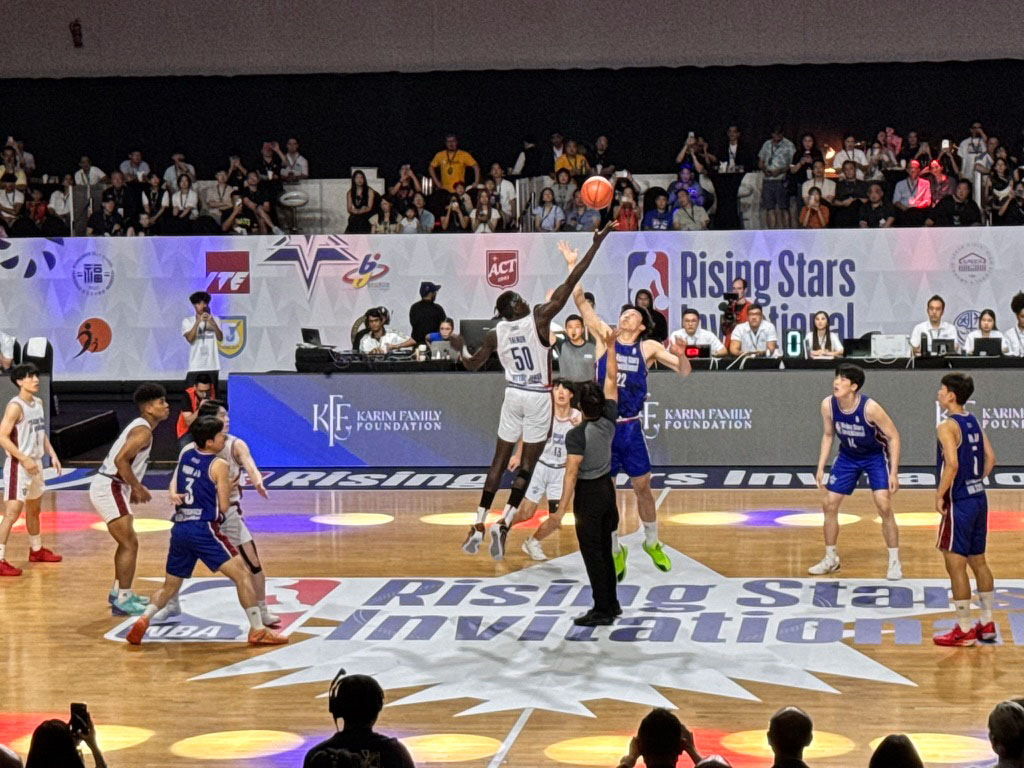
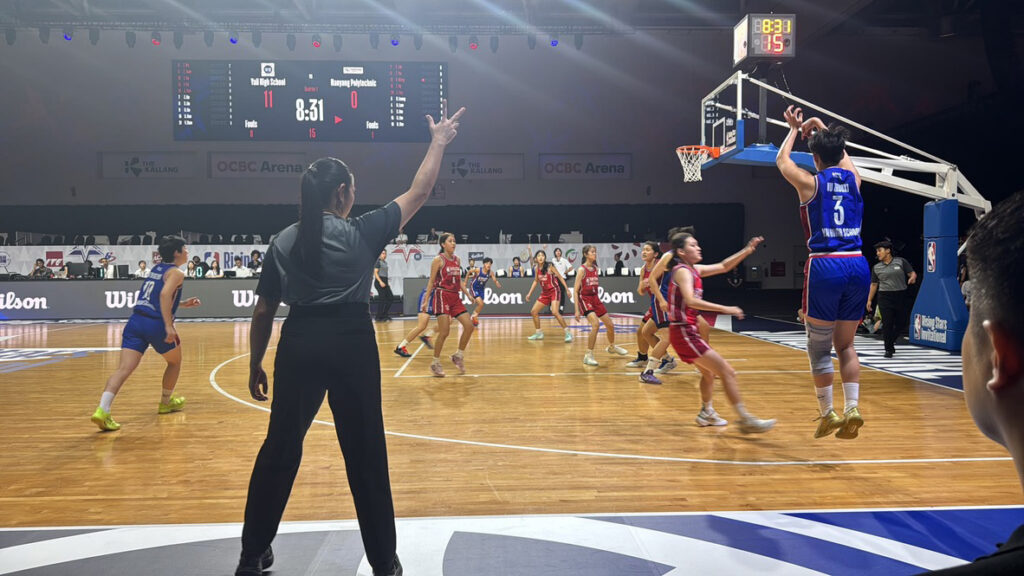
I was at OCBC Arena in Singapore last week for the opening day of the NBA Rising Stars Invitational, and again for the sold out finals. Thanks to some good friends at NBA who extended the invite, I got to watch the whole arc of it, from the first tip-off of the tournament to the last buzzer of the championship game.
The thing that really struck me wasn’t just the basketball, although the level of play from these high school teams was genuinely impressive. It was watching seventeen and eighteen year olds from across Asia-Pacific compete in a proper arena, on an NBA-approved court, under proper lights, in front of a crowd that had paid to be there. Twelve boys’ teams and twelve girls’ teams, drawn from qualifiers in Bangkok, Melbourne, Taipei and Tokyo, with Singapore fielding two teams of its own in each division.
NBA champions Mitch Richmond and Jeremy Lin, together with WNBA champion Lauren Jackson and Los Angeles Lakers’ Rui Hachimura walked the floor with these youths during the NBA Rising Stars Invitational week, not as a photo opportunity tacked onto the schedule, but as part of clinics and panels built specifically for them.
To me, this is a platform. Not a marketing campaign with youth as the backdrop, but an actual stage handed to young athletes who would otherwise never get anywhere near this level of exposure, coaching or competition.
I Have Seen This Work Before
Back in my FOX Sports days, I led a programme called the FOX Sports Academy. The whole premise was to take young people who had talent or curiosity in sport and media, and put them somewhere they could not have got to on their own. We worked with industries and with the youth themselves to build those bridges.
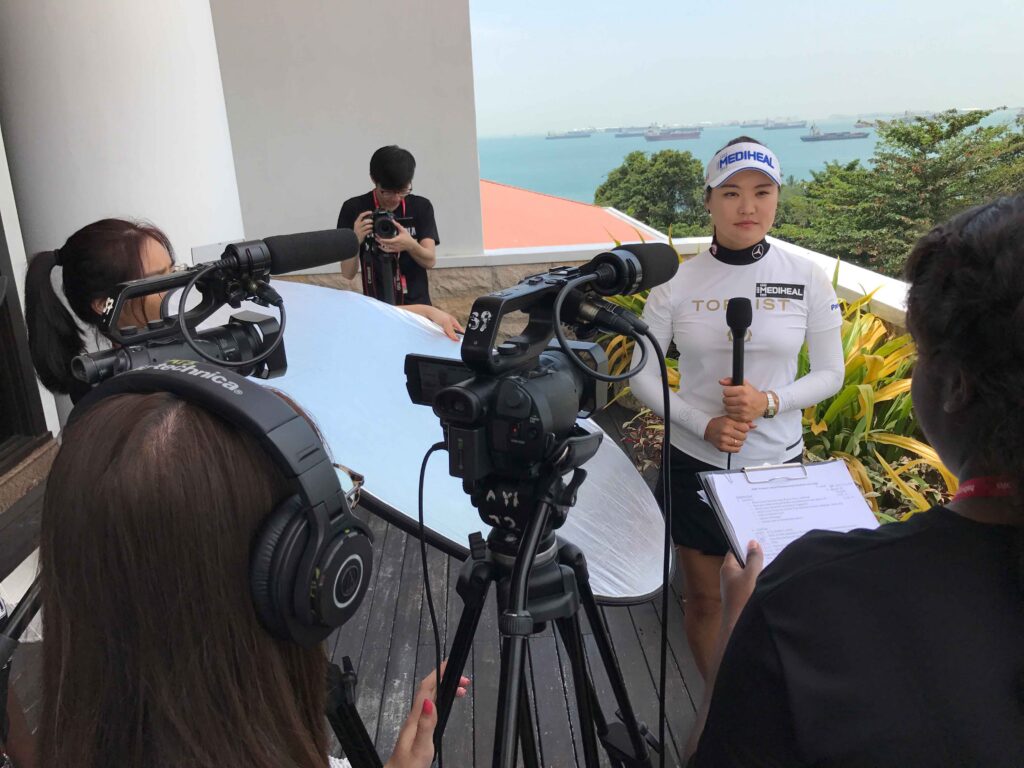
One of the things I am proudest of from that time was bringing Nanyang Polytechnic Mass Media students in to script, interview, film and produce 30-second segments with professional athletes at international tournaments such as the HSBC Women’s Champions for a few years. These were students still learning their craft, and suddenly they were the ones holding the microphone, calling the shots, and walking away with real footage that we aired on our cable channels. Funny enough, all these years later I am back at Nanyang Poly, this time as an adjunct lecturer. Some circles really do close.
We also created access for at risk youth into spaces they would never normally see, including pit access at Formula One, One Championship, our FOX Sports studios, media rooms used by professional reporters and more. I cannot recall the exact year now, it was around a decade ago, but I remember exactly what it did. It is one thing to watch a sport on television. It is another thing entirely to stand in a pit lane or in a fight ring and realise this world is not as far away as you thought.
That is the part people underestimate about platforms like this. The opportunity itself matters, but so does the simple act of being let in. Of having someone decide you belong somewhere you were not sure you were allowed to be.
What Made NBA Rising Stars Invitational Stand Out
What I appreciated most about NBA Rising Stars Invitational was that it did not stop at the games. There was a coaches clinic to lift local coaching standards, a leadership panel and clinic specifically for the girls’ programme, and dedicated junior clinics that ran across the closing days of the tournament. The fan zones around town, at Bugis Junction and later at Kallang Wave Mall, meant the energy of the event was not locked inside the arena either.
Watching the finals sell out was its own kind of statement. These were not NBA stars on the floor. These were high school kids, and the crowd still showed up in force. That tells you something about the appetite that already exists for this kind of platform in this part of the world, and how much room there still is for more of it.
A Challenge to the Rest of Us
I do not say any of this as someone admiring from a distance. I have built something like this before, on a smaller scale, with fewer resources, and I have seen what it does for a young person who suddenly finds themselves somewhere they were told was out of reach. I am a firm believer in this because I have watched it work.
So here is the part I want to put to other marketers and brand leaders reading this. We talk constantly about brand purpose, about authentic engagement, about standing for something beyond the product. Youth platforms are one of the most direct ways to actually do that, rather than just saying it. You do not need NBA sized budgets to create one. You need a willingness to open a door that is currently closed, and the follow through to make sure the kids who walk through it are genuinely supported once they are inside.
If your company has any kind of platform, reach, or access that a sixteen year old somewhere would consider a dream, ask yourself what it would take to let a few of them in. Perhaps not as a one-off CSR moment for a press release, but as something built to last and built to matter. Need some help? Come find me for a chat here.
I will be honest, watching that final at OCBC Arena reminded me why I got into this work in the first place. Not for the campaigns. For moments like that one. You should have seen the look on their faces.