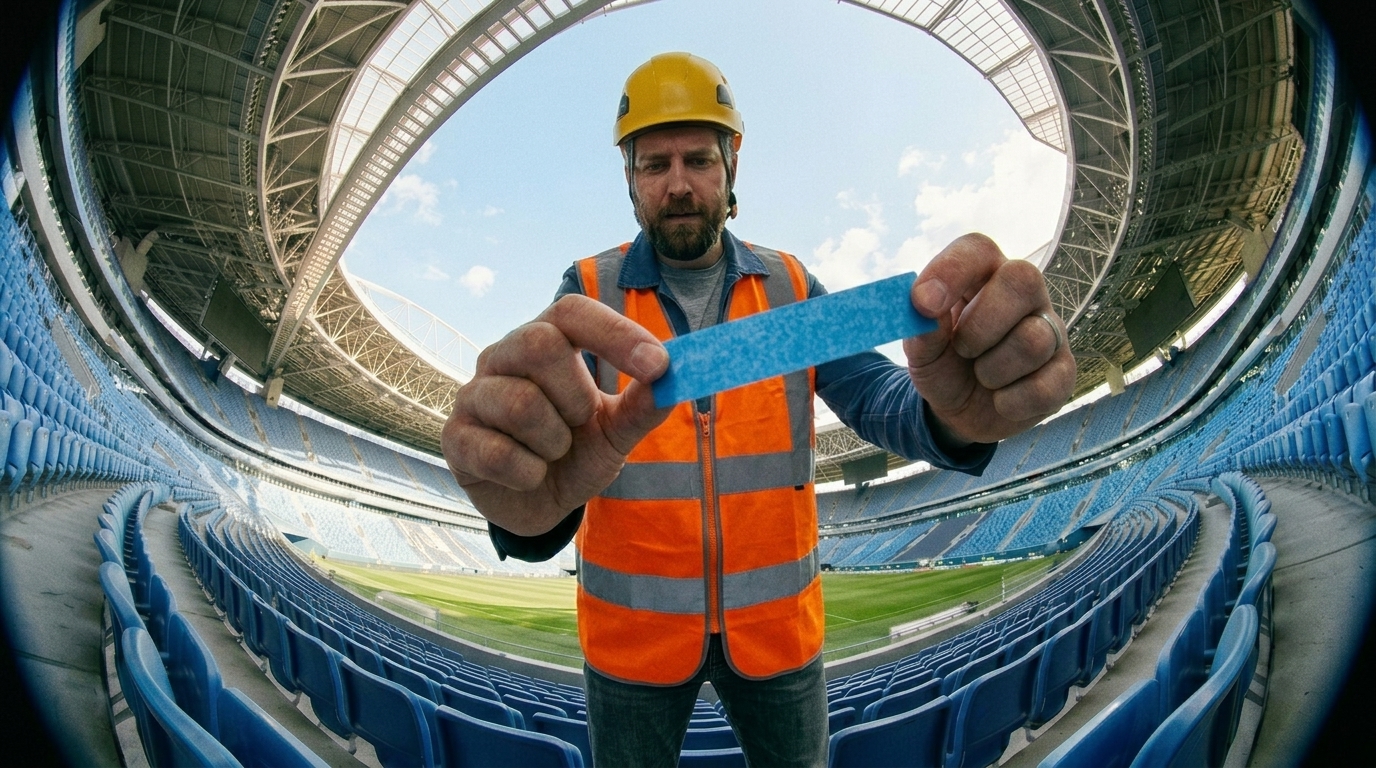
At Gillette Stadium in Boston, an estimated 60,000 individual pieces of blue tape were cut and pressed over the Gillette logo, roughly one for every seat in the place. It wasn’t a specially designed sticker, neither was it a quick sign swap. It was just blue tape, pasted by hand, seat by seat, for a tournament Gillette has no part in.
At what is now called Atlanta Stadium, formerly Mercedes-Benz Stadium, 2,000 separate branding images had to be found and covered before FIFA would even sign off on the venue. Officials there reportedly spent more than a year going back and forth over what to do about the giant Mercedes star built into the roof, before FIFA finally gave up and granted an exception, because removing it risked damaging the building itself.
I have been a little obsessed with the World Cup brand cover-up happening at this tournament, and it has nothing to do with the football. Understandably given that I’m a statistical abnormally – I’m more of a basketball fan.
Sixteen stadiums across the US, Canada and Mexico, all of them built and named years before FIFA ever turned up, all of them required to scrub themselves clean of anything that is not an official tournament sponsor. AT&T Stadium became Dallas Stadium. SoFi Stadium became Los Angeles Stadium. Lumen Field became Seattle Stadium. There is apparently an entire agency-run programme behind all this, Look Company and The Team Live, which used to be called Wasserman, won FIFA’s tender for what is officially the Venue Dressing Programme, and some of the actual physical work gets farmed out to local contractors at each venue. Brought in specifically to de-brand a stadium for a few weeks and then put it all back once the tournament ends.

I teach marketing strategy at a local polytechnic, and this World Cup brand cover-up is one of those cases that walks straight into a lecture without me having to dress it up at all (pun intended). A rule with zero upside for the brands stuck with it. It was pure cost with no negotiation nor input. And yet a handful of brands found something inside that constraint worth more than the signage they lost. That is really the whole story here, and I think it is worth sitting with properly rather than just enjoying it as a meme. It is the same instinct I wrote about in my SEO vs AEO vs GEO piece actually, the brands paying attention to how the game has changed are the ones getting noticed for free.
The World Cup brand cover-up, explained
FIFA is not doing this to be tidy. It is protecting a record USD 2.8 billion in sponsorship revenue for this tournament cycle, money paid by official partners like Coca-Cola, Verizon and Budweiser specifically so they are the only brands visible inside these stadiums. If a non-sponsor’s logo is sitting in the background of every broadcast for free, that exclusivity stops being worth anything, and so does the cheque that came with it.
So the brands caught in the middle of this had no say in any of it. However, what they did have a say in was what they did once the tarps actually went up.
The brands that turned it into something
Levi’s is the one everyone has already seen, and fair enough. Levi’s Stadium in Santa Clara had its name covered with a plain white tarp, and the tarp kept the batwing shape visible even with the wordmark gone. Levi’s noticed immediately. They changed their Instagram profile picture to the covered logo, posted a clip welcoming everyone to “the beautiful [redacted] stadium,” and followed it up with a video of themselves covering the red tab on their own jeans, just to keep the joke running a bit longer. I am going to say it plainly, this is probably the single best piece of marketing to come out of the entire tournament, and they did not pay a cent for stadium signage to get it.
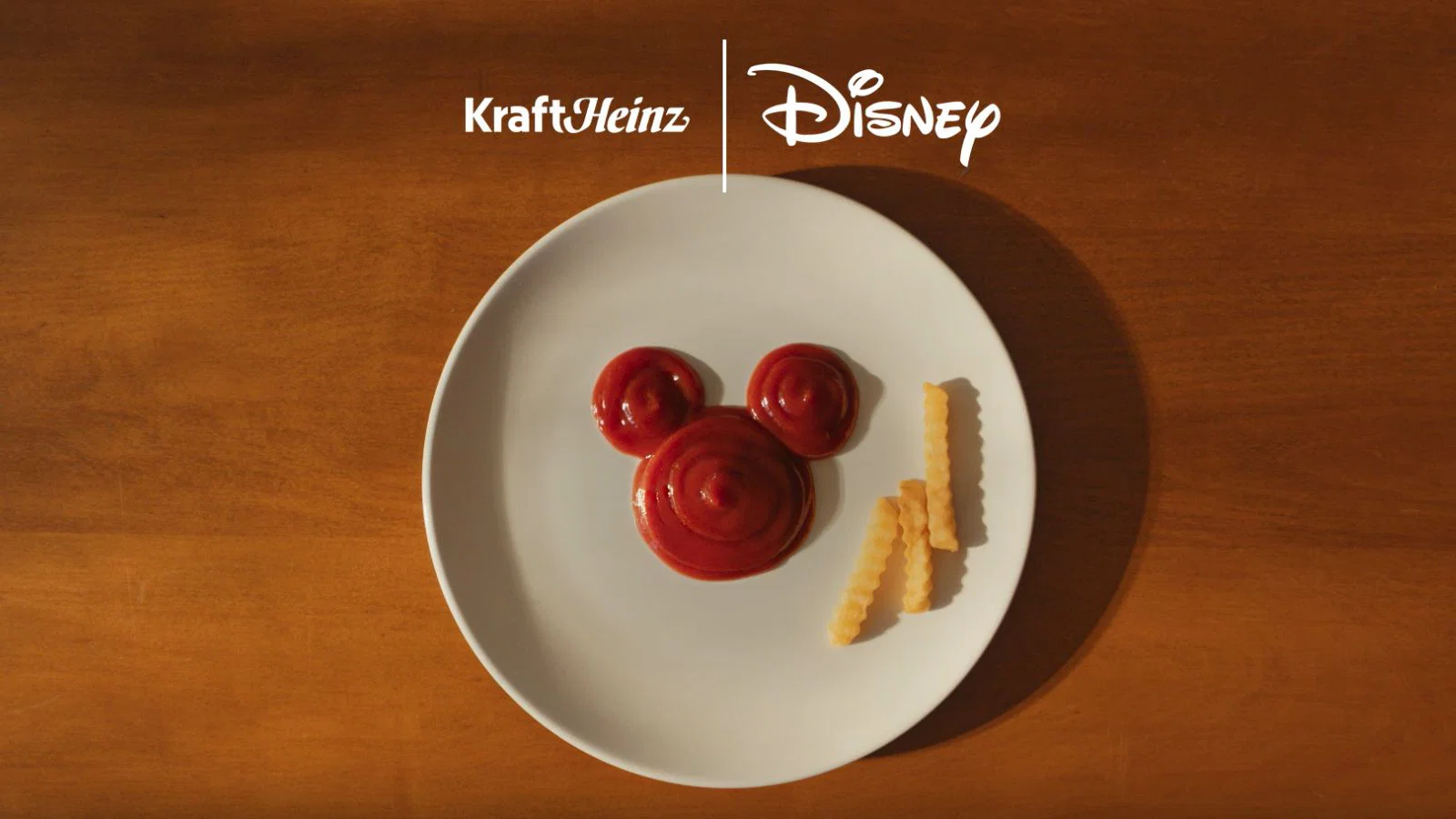
Heinz does not even have a stadium to lose, but it still got swept up in the same rule. Every Heinz bottle inside FIFA World Cup Stadium had its label taped over in black, presumably so it could not out-advertise whichever condiment brand actually paid FIFA for the privilege. Heinz called the result the “Unofficial Stadium Ketchup.” Smaller move than Levi’s, but same instinct. If you are going to be blocked out anyway, you might as well make the blocking the joke.
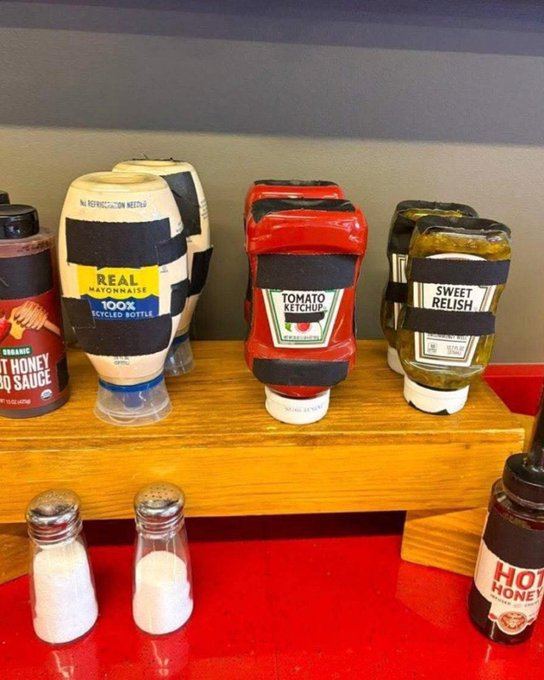
Image Credit: X.com
Gillette had it worse than most people realise in this World Cup brand cover-up. It was not just the scoreboard and the exterior signage, it was that seat-by-seat tape job across the entire stadium. Whether the scale was the point or just thoroughness, once a fan posted a photo of a single taped seat, the internet did the rest, and the resulting “shaving cream” edits probably did more for Gillette that week than the actual rule was ever supposed to allow.
I will be honest, my favourite case in this whole World Cup brand cover-up is the one that did not quite land. Lumen Technologies, whose stadium in Seattle got the same treatment, had their own chief marketing officer film himself helping cover up his company’s branding, with a nice line about how his job is normally to make the brand visible everywhere, and for these few weeks his job is to make sure it is visible nowhere. That is a genuinely smart read of the situation. Same idea as Levi’s, really. It still only pulled a couple hundred likes. No batwing-shaped silhouette doing half the recognition work for free, I suppose. Spotting the opportunity is clearly not the same as having the asset that makes people stop scrolling.
The brands that just paid the cost
Most of what got swept up in the World Cup brand cover-up never turned into anything, and that is worth saying too, since it is the more common outcome by far. Ford’s vehicle display at AT&T Stadium got draped rather than removed. SoFi Stadium’s cover job was reportedly a bit patchy in places. Atlanta United had to pull a sponsor logo off its own training ground entrance because Uzbekistan was using the facility as a base camp. None of this became a moment for anyone. It got absorbed as a cost of being anywhere near a FIFA event, which honestly is fine, not every inconvenience needs to become content.

Mercedes-Benz sits completely outside this story though. It did not turn the constraint into content, and it did not absorb the cost without complaint either. It fought the rule directly for over a year until FIFA gave in, and the roof logo survived because the building made compliance physically impractical, not because anyone in their marketing team was being clever. One stadium where the branding made it through the entire programme untouched, and the route there was a year of negotiating rather than one good post.
What I keep coming back to
The brands that actually got something out of this World Cup brand cover-up were not the ones with the cleverest tarp. They were the ones who noticed something fairly simple. The cost was already fixed and already paid. The upside of reacting well to it had no ceiling at all. Once you cannot do anything about the downside anymore, the only real decision left is whether you do something with the part you can still control, which is almost always the reaction and not the rule itself.
Mercedes shows you the other path. Spend a year fighting to make the constraint disappear entirely, and maybe you win, but you end up exactly where you started, with no story to tell anyone about it afterwards.
You are not going to get to choose most of the constraints that land on your brand. Algorithm changes, a sponsorship rule you had zero say in, a platform redesign nobody asked your opinion on. What you do get to choose is whether you absorb it without a word, fight it, or turn it into the most interesting thing your brand says all year. Three brands here chose the third option. One of them clearly did it better than the other two.
What’s next, brothers in arms
Here is a cheeky thought before I wrap up this World Cup brand cover-up story. Levi’s, Heinz and Gillette have all, separately, made the same joke this tournament. We got covered up, and we think that is funny. They have even been acknowledging each other’s versions online, three brands with nothing in common commercially, suddenly speaking the same language because they got hit by the identical rule in the same few weeks.
The obvious next move, if any of them are bold enough, is to stop telling the joke alone and actually do something together, and it does not even need to be about the World Cup at all. This tournament is just what revealed they all have the same instinct, quick, a little self-aware, happy to laugh at themselves in public rather than guard the brand voice too precious to touch. None of them share a customer base in the usual sense. What they do share is a sense of humour that has now been tested in public three times over, and a proper collab built on that, a capsule, a stunt, a campaign that has nothing to do with stadiums or tarps, would be a far better story than any one of their solo jokes managed on its own.
Whether anyone in those marketing departments actually picks up the idea once the World Cup dust settles, who knows. But if I were sitting in any of those rooms, that is the slide I would be putting up next.