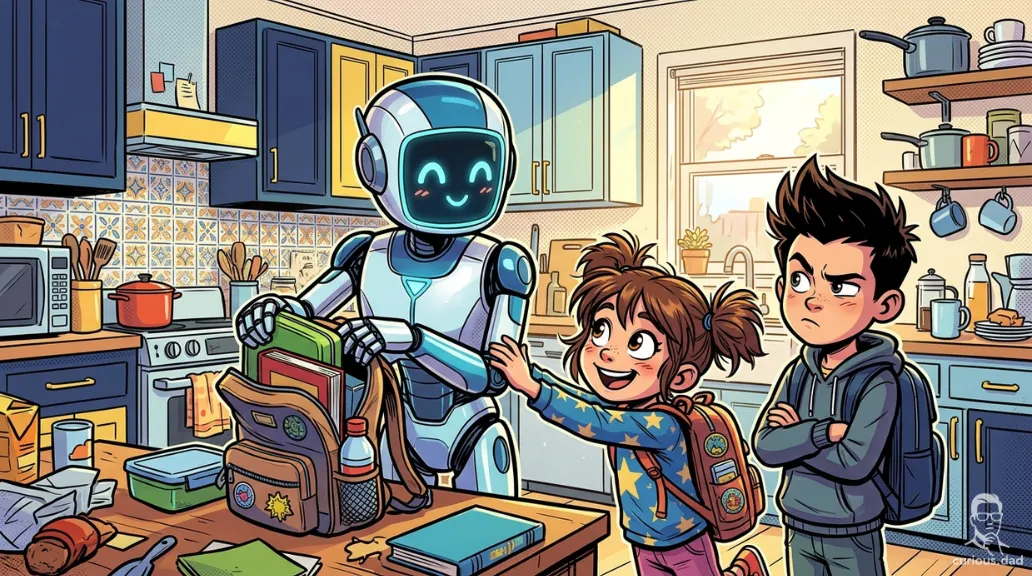
When Singaporean author Xie Shi Min found her novel listed on Shopee earlier this year, she did not find it the way she had imagined. What she found instead was AI-generated content presenting Ghost Hunters of Geylang, a young adult story dealing with generational trauma and abuse, as a cheerful children’s adventure. An AI avatar told viewers they could smell durian from the pages. The symbolic sword on her cover had been rendered as a pole. “To have it be put through AI,” she told CNA, “is just plain insulting.”
She had not made the video, nor approved it. She did not even know it existed until someone pointed it out to her.
This is what unsolicited AI-generated content looks like at the seller level, and it is spreading across Shopee and TikTok Shop in Singapore and across the region. The more familiar term for it is AI slop, low-effort, auto-generated content produced at scale that gets the details wrong and misrepresents the product.
The Problem with AI-Generated Content
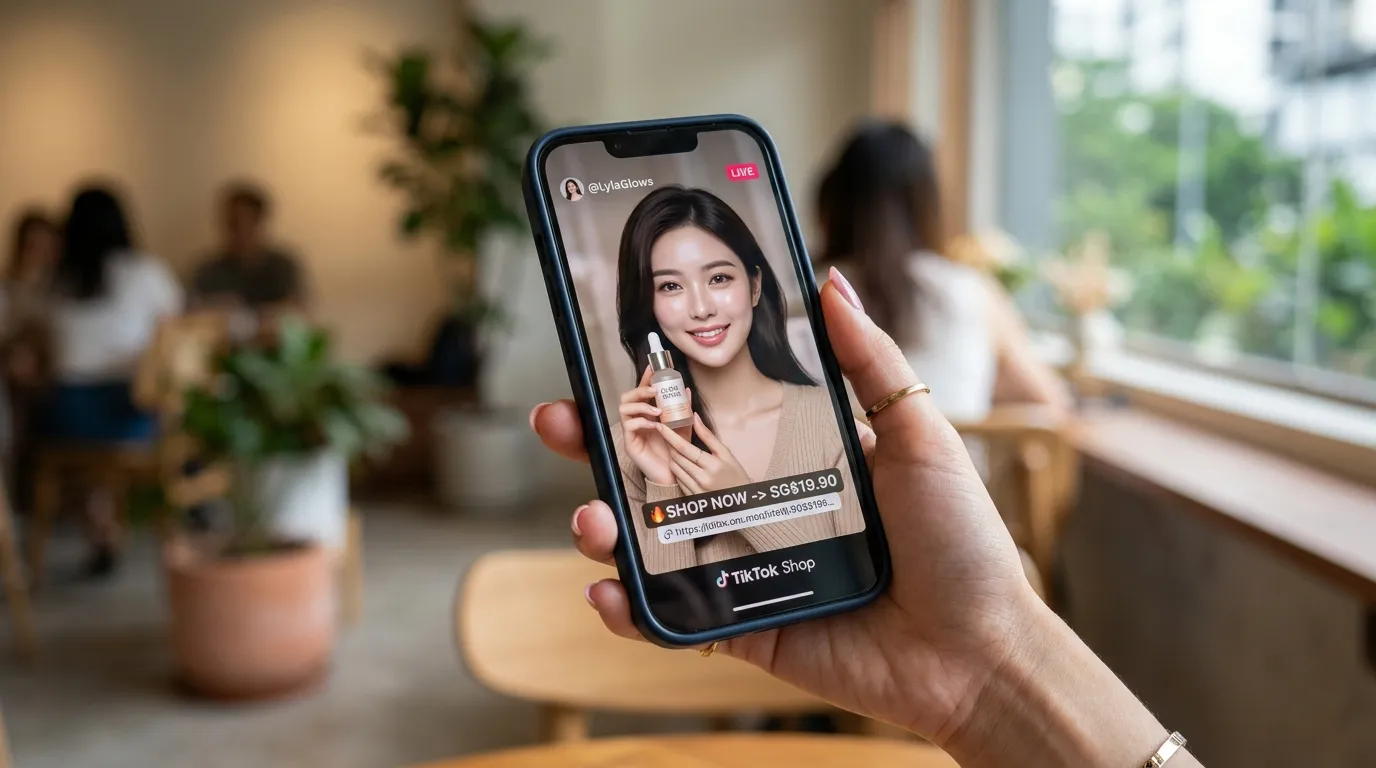
Shopee introduced a video feature in late 2025 to give shoppers more product information before they buy. TikTok Shop, similarly, updated its video maker tool to allow creators to automatically generate AI videos with embedded product links. The intent behind both features was reasonable enough, with more content, more context, better conversion. The gap, as it turns out, is that neither platform requires sellers to approve what gets published about their products.
Under Shopee’s open collaboration model, any affiliate creator can generate and post a promotional video for any listed product. The seller is not notified, nor can they remove it independently. When Ms Xie reported the video to her publisher Epigram Books, they flagged it to Shopee and advised her to file her own complaint as well. When she checked the listing again weeks later, a different AI-generated video had appeared. “It is like a Hydra,” she said. “You kill one video and another comes up.”
Epigram Books has filed around ten similar complaints since March, with five or six authors having raised the issue. Their online sales and marketing manager Chloe Chee noted that the seller dashboard has options to disable AI-generated images, but not videos, and that even when the feature is turned off, the changes do not take effect immediately.
Koh Wan Yi, who runs Helumi, a Singapore design studio selling planners and paper products, encountered the same problem on TikTok first and later on Shopee. AI-generated creators were promoting her products with calendars shown at wildly incorrect sizes, stickers in wrong colours, and in one case, an entirely Spanish-language video for a shop that operates only in Singapore. She tried asking TikTok Shop to block specific affiliate creators and was told she could not. The alternative offered was to disable open collaboration entirely, which she eventually did before her latest collection launch, though it also cut off the legitimate affiliate partners she actually wanted to work with.
That trade-off points to something worth considering. Affiliate commerce in Southeast Asia has grown into a serious commercial channel, with influencer and affiliate marketing now linked to an estimated 32 per cent of regional e-commerce sales according to Cube Asia’s 2026 report, equivalent to roughly US$70 billion. At that scale, content quality is no longer just a creative consideration, but a commercial one. The open architecture that made affiliate marketing accessible and scalable is the same architecture letting AI slop through, and sellers are currently absorbing the consequences of that on their own.
Part of what makes this hard to fix is the economics. An affiliate creator can generate dozens of product videos in minutes at near-zero cost, post them across listings, and earn commissions on whatever converts. As I wrote earlier this year, AI-generated video production can cost as little as one to two US dollars per clip when open-source tools are used. The accuracy of the content is not the creator’s problem. The seller bears the brand risk while the creator captures the upside.
Shopee, responding to CNA’s queries, confirmed it had contacted affected sellers and noted that product videos may include user-submitted content, including AI-generated material. What Shopee did not address was whether sellers are informed when such videos appear on their listings, or whether they have the ability to remove them. That silence is telling.

Why This Is More of a Brand Problem Than a Content Problem
The instinct might be to treat this as a moderation issue, a platform operations problem that will eventually get cleaned up. The sellers involved see it differently, and they have every right to.
Epigram Books took to Instagram publicly to clarify that the AI-generated videos on its listings were not commissioned by the publisher. Authors had been contacting them directly, assuming the publisher was responsible. “It would tarnish our brand,” said Ms Chee. “It definitely destroys our reputation.” For Ms Koh, the damage is to something she has spent years building carefully: a visual identity and brand aesthetic that the AI videos simply disregard. “Once you go into the profile and see this AI-generated video pop up, it just completely ruins a lot of that credibility we have built up.”
This is a brand safety issue in a form that most influencer contracts and brand protection frameworks have not caught up with yet. An AI avatar misrepresenting a product’s tone, audience, or contents can generate returns, complaints, and negative reviews before anyone catches it. For brands with deliberate positioning, that is a meaningful risk.
CNA’s reporting noted that the Advertising Standards Authority of Singapore has flagged that consumers are already concerned about generative AI being used to create misleading advertisements. At that volume, AI-generated content that misrepresents products doesn’t look like a fringe problem, but a structural one.
Instagram Just Made Disclosure a Reach Question
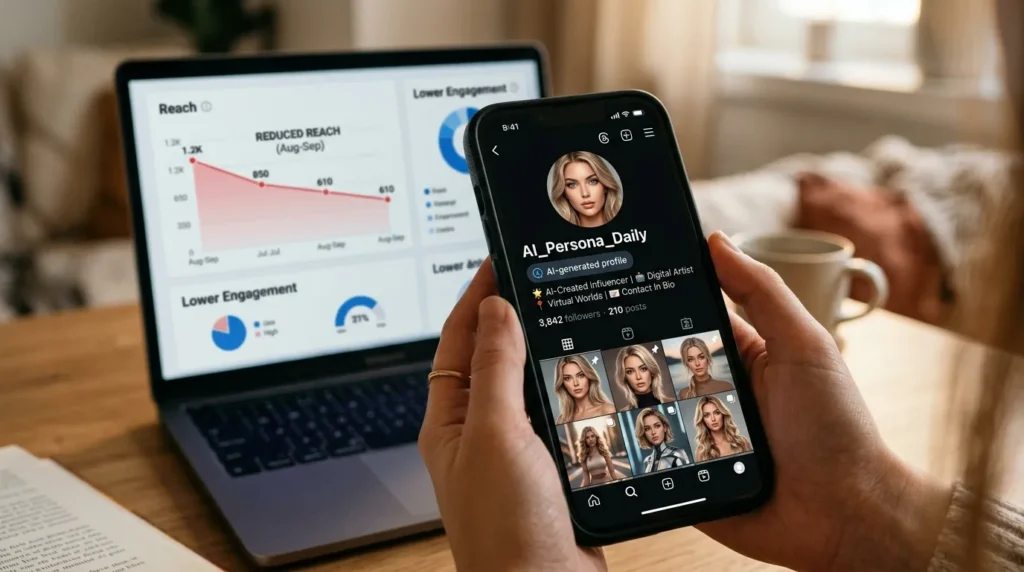
Whether or not platforms are responding to each other, the direction of travel is becoming clearer. On 31 August, Instagram announced it would limit the reach of accounts featuring AI-generated people without proper disclosure, renaming its existing “AI creator” label to “AI-generated profile” in the process. Undisclosed profiles lose eligibility for Reels and Explore recommendations, which is where organic discovery happens. Profiles that correctly label themselves face no such restriction.
The important distinction Instagram drew is between AI as a creative tool and AI as an account’s entire identity. A creator using AI to edit images, draft captions, or design graphics is unaffected. The policy targets profiles where the persona itself is AI-generated and that fact is being concealed from users.
Instagram was clear about why it moved now. Users had been discovering, sometimes well after following an account, that the person they thought they were engaging with did not exist. The New York Times had found hundreds of AI-generated wellness personalities making health claims and supplement recommendations across social media. The Goose dating app had been promoted by a network of apparently AI-generated male influencers, some of whom had been sending direct messages to potential users. These are not edge cases. They reflect what happens when AI-generated content is deployed at scale without disclosure requirements and without enforcement.
The reach penalty is the enforcement. Voluntary labelling, which Instagram had been testing since May 2026, produced insufficient uptake. Attaching consequences was the only way to make disclosure of AI-generated content meaningful.
Platforms Are Setting the Standards, and Brands Need to Follow
Shopee already has a formal AI User-Generated Content policy. It requires all AI-generated content to be labelled, with affiliate commissions turned off for labelled material and penalty points issued for violations. Instagram has now matched that energy at the social layer. The policy architecture is being built. The gap that remains is operational, on the seller and brand side.
For marketers running affiliate programmes across Southeast Asia, a few things are worth examining closely. The first is whether your influencer and affiliate contracts address AI-generated content at all. Most were written before this became a live issue, and the Koh Wan Yi case illustrates how quickly AI-generated material can appear on your product listings without any action on your part.
The second is whether your brand safety checks include the affiliate content layer. Most brand safety frameworks focus on where ads appear, not on what AI-generated content affiliate creators are producing and attaching to your product pages. Those are different surfaces with different risks, and the Xie Shi Min and Epigram Books cases show that the reputational damage can flow upstream to the brand even when the brand had no involvement at all.
The third is the disclosure question, which is no longer just an ethical consideration. Instagram has made it a reach question. Shopee has made it a commission question. The Singapore government confirmed in a February 2026 parliamentary reply that the Consumer Protection (Fair Trading) Act covers misleading AI-generated claims, and that the Competition and Consumer Commission has introduced an AI Markets Toolkit to help businesses assess compliance. The regulatory framing is in place.
What platforms and regulators are converging on is the same thing that consumers have been saying all along. They want to know when a profile, a persona, or a product recommendation is AI-generated. The surface may differ, whether it is a social feed or a marketplace listing, but the expectation is the same. The sellers in Singapore already experiencing the consequences of that gap know what it costs when the answer is unclear.
If you are running affiliate marketing at any meaningful scale in this region, the question is probably not whether AI-generated content is appearing in your channel. The question is whether you know about it when it does.