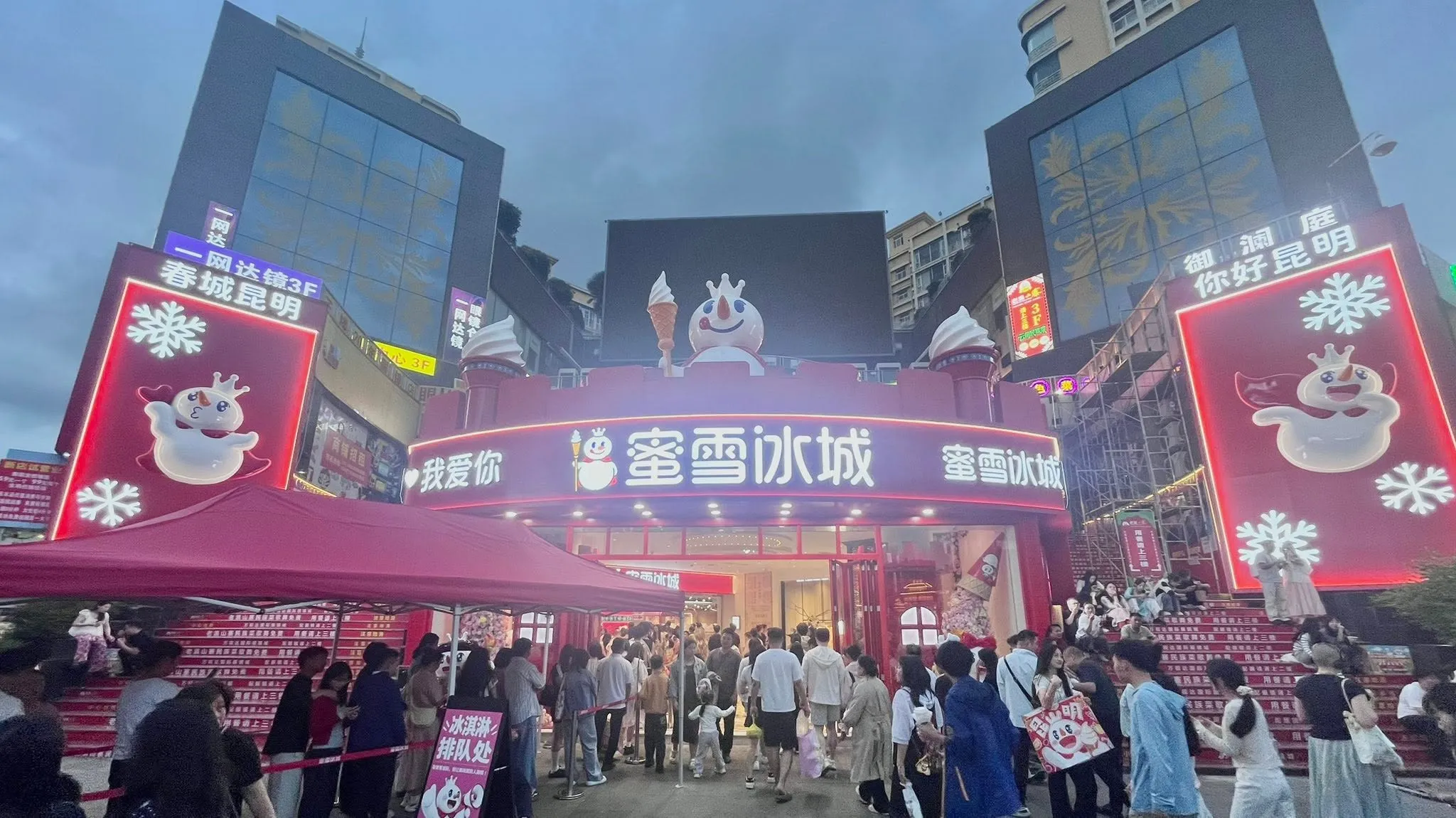
Earlier this year I was in Shenzhen, China for work. At some point during the trip, my business partner and I were out after dinner taking in the street food culture when we chanced upon one of the many Mixue stores around, which apparently is something of a must-visit.
And the reason, a S$0.40 ice cream cone. Same brand I occasionally have in Singapore, same soft serve and bubble tea, same red signage with the snowman mascot. But standing there in Shenzhen paying forty cents for it felt entirely different from paying S$1.50 here.
I was recently reminded of that moment, and it got me thinking about the Mixue marketing strategy, and what it actually means to build a brand around a price point rather than around a story.
That small gap in experience is, I think, the whole Mixue story.
The Numbers Behind the Mixue Marketing Strategy
The scale of what the Mixue marketing strategy has produced is genuinely difficult to grasp until you put it next to something familiar.
By the end of 2025, Mixue had nearly 60,000 stores globally, up from 46,000 a year earlier. That is more outlets than McDonald’s at roughly 43,000, and more than Starbucks at roughly 40,000. In 2025 alone, the brand added over 13,000 net new locations, equivalent to opening 37 new stores every single day.
Revenue for 2025 came in at 33.56 billion yuan, around $4.91 billion USD, up 35.2% year on year. Net profit rose 33.1% to 5.93 billion yuan. When Mixue listed on the Hong Kong Stock Exchange in March 2025, the retail offering was 5,200 times oversubscribed. Shares jumped 43% on the first day of trading.
The founder, Zhang Hongchao, started this in 1997 with 3,000 yuan from his grandmother and a shaved ice machine in Henan province. He was 21. The menu today spans soft serve, bubble tea, fruit drinks, lemonade and coffee, all priced to stay within reach of almost anyone.
There is a caveat worth adding here though, for all the outlet dominance, Mixue’s revenue still trails Starbucks by a wide margin. Starbucks does roughly $36 billion annually. The gap is entirely explained by the price point. Fewer dollars per cup, multiplied by an enormous volume of cups, still adds up to something remarkable, but the comparison is stores, not dollars.
What Actually Makes This a Marketing Story
The instinct when writing about Mixue is to reach for the word “disruption”, but I’d rather not. What the Mixue marketing strategy actually did was make a very deliberate set of choices that most brands wouldn’t be able to make, and then stick to them for nearly 30 years.
It reminds me, in a way, of the Costco hot dog. A dollar fifty since 1985, never raised, fiercely protected by the founder even when margins were squeezed. Different product, different market, same underlying logic. The price is the promise, and breaking it breaks something bigger.
I should say here that in marketing, we generally caution against competing on price alone. It is a strategy that is easy to copy, hard to sustain, and tends to attract customers with low loyalty the moment someone cheaper comes along.
What the Mixue marketing strategy demonstrates, though, is a different proposition entirely. Price was never just a tactic for them. It was a founding commitment, baked into the supply chain, the franchise model, the sourcing operations across six continents. Most brands would not have the stomach for that, and most could not execute it even if they tried.
The first choice is that price is the positioning. Not a feature of the positioning, not something to justify with quality storytelling or origin mythology. The price itself is the brand promise. In Indonesia there is a running joke that any empty shophouse will soon become a Mixue. That ubiquity is not accidental. It is what happens when a brand decides that being reachable by almost everyone is the thing it is building toward.
The second choice is that memorability does not require a big budget. Snow King, the cheerful snowman mascot, became a meme across Southeast Asia without Mixue engineering it. There is something here that the Levi’s World Cup moment also illustrated, that when brand assets are distinctive enough, they travel on their own. The jingle spread through TikTok in languages that most of its listeners do not speak.
What made them spread is simpler than most brands would like to admit. The brand assets are distinctive enough to parody, consistent enough to recognise, and cheap enough to replicate across 60,000 locations without losing anything in translation. When something is that easy to parody, it is usually because it is already lodged somewhere in the brain.
The third choice, and perhaps the least obvious one within the broader Mixue marketing strategy, is that density is a marketing strategy. Nearly 60% of Mixue’s China stores are in third-tier cities and below. In Southeast Asia, the franchise model lets the brand quickly integrate into local markets through local partners who understand the ground better than any headquarters ever could.
Every store is a piece of media. Every location is a reminder. You do not need to buy awareness when you are already on the street corner.
The S$0.40 Did the Work
When I paid forty cents for that ice cream in Shenzhen, I was not evaluating the product against other ice creams. I was having a small moment of delight that the price made possible. The ice cream itself is fine. I have had better.
But the transaction felt good in a way that a more expensive purchase would not have produced, and I found myself standing there thinking about the brand rather than just eating the cone.
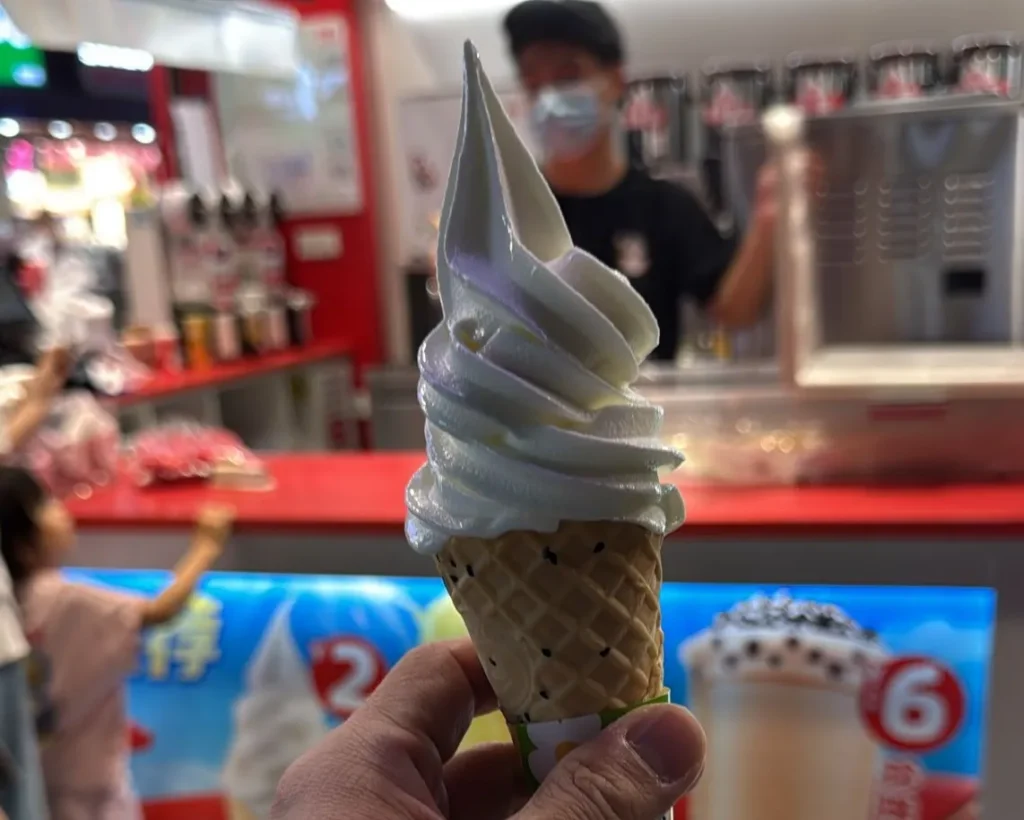
That, I think, is what the Mixue marketing strategy has understood better than most. Price is not just a number. At the right level, it becomes an emotion. And an emotion, repeated 60,000 times across 13 countries, compounds into something that even the most expensive brand campaigns struggle to replicate.
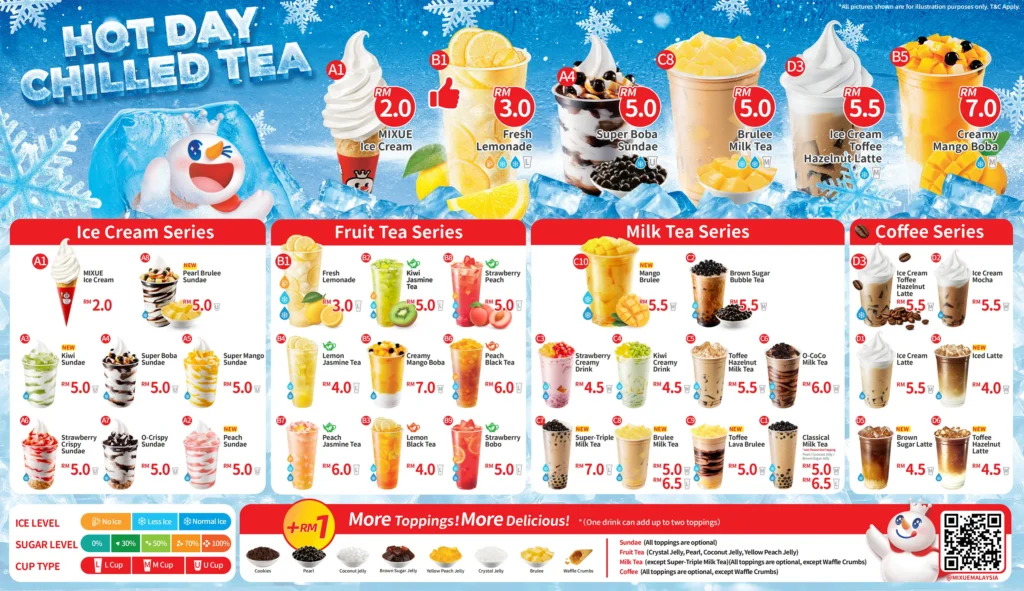
What makes this particularly relevant right now is that the affordability is not a China-only phenomenon. In Malaysia, the ice cream cone is RM 2.00. In Indonesia, it starts at around Rp 8,000, and a brown sugar milk tea costs around $1.10, around S$1.40, which is roughly a third cheaper than comparable offerings from rival chains. Most items across the region stay well under the equivalent of S$2.00.
At a time when consumers across Southeast Asia are watching what they spend more carefully, a brand that has never asked them to stretch is in a quietly advantageous position. Affordable everywhere it operates is a harder thing to pull off than it sounds, and Mixue has done it without ever repositioning itself upward.
Whether that model holds as costs rise and competition in the freshly made beverage market intensifies is a separate question. The margins are already showing strain, and UBS downgraded the stock earlier this year, pointing to rising raw material costs and intensifying competition.
But the brand logic itself, the idea that you can build genuine affection and massive scale by simply never stopping being affordable, that part seems durable in a way that premium strategies rarely are.
I keep thinking about the forty cents. It was such a small amount to pay for something that is still sitting with me months later. And to me, this is a Mixue marketing strategy worth studying.