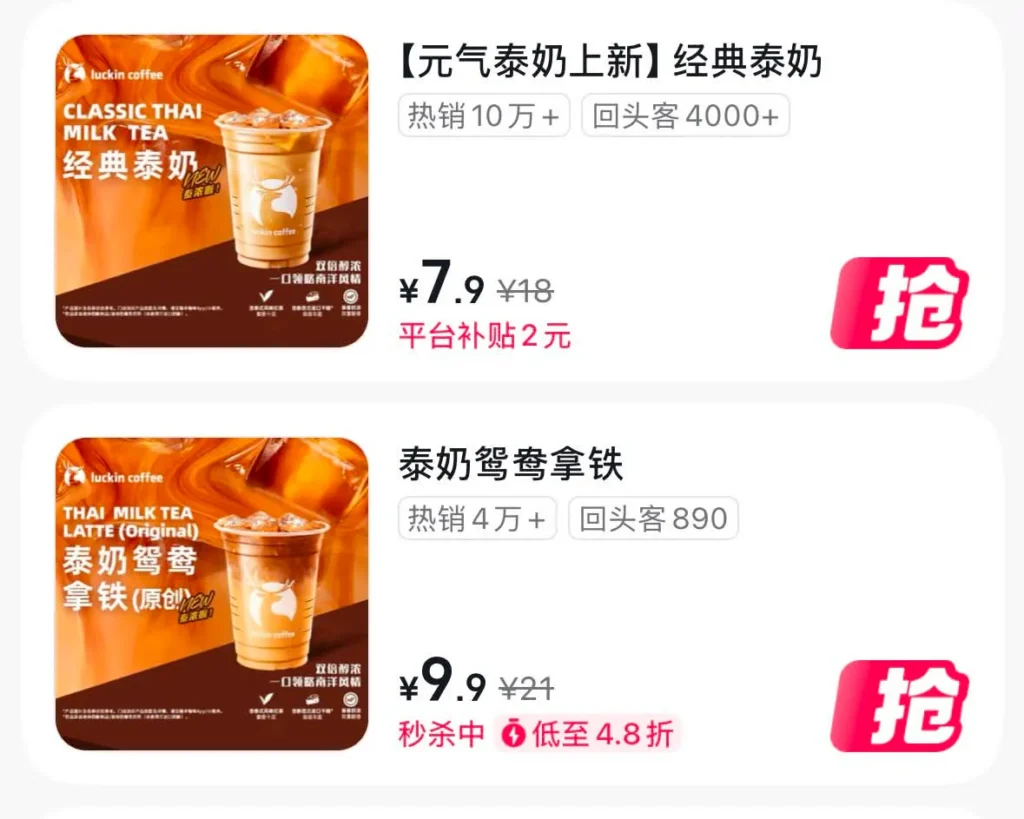
Imagine your legal team flies to Thailand to fight a brand protection marketing case. They win. And on the way back, someone decides the victory deserves more than a press release. So Luckin Coffee launched a milk tea instead, with a warm-up line that read, “the inspiration brought back by our legal team after the lawsuit in Thailand.”
It sold out in many stores before 10am on launch day.
That single creative decision is what makes this story worth looking into. Most brands in that position would have posted a statement and moved on. Luckin did something that is actually quite rare in brand protection marketing, it turned the win into a product.
What the Legal Team Was Actually Fighting For
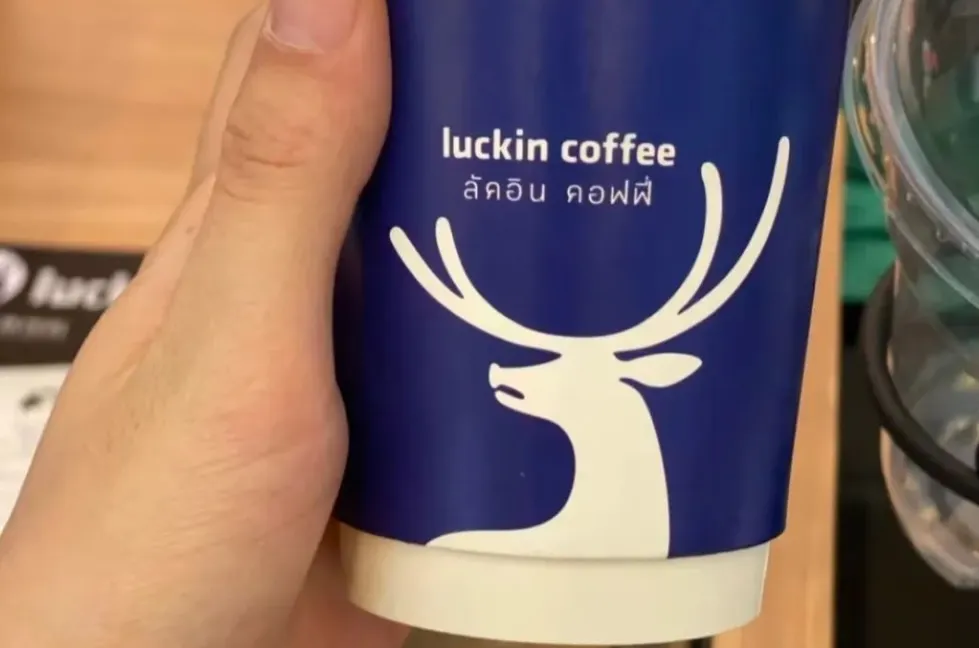
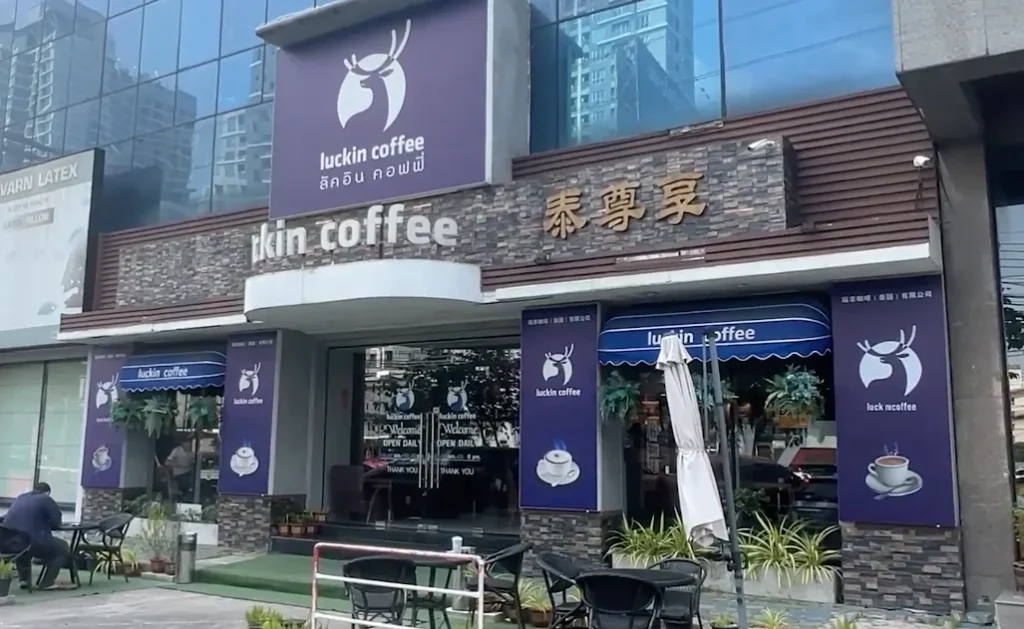
But let’s dial back a little for the context. In 2019, a Thai company called 50R Group registered the Luckin Coffee name and logo in Thailand. The deer logo was flipped to face the other direction. Everything else was near-identical from the store design, the coffee cups, and even the colour palette. Luckin had no presence in Thailand at the time, and under Thailand’s first-to-file trademark system, that absence was enough for 50R Group to establish legal rights to the name.
Luckin only found out in 2022, when customers started sending in photos of Luckin-branded stores they had stumbled across while travelling. The company confirmed it had no operations in Thailand. What it did have was someone else legally trading on its name, in a market it had not entered, using an identity it had spent years and considerable investment building.
When Luckin filed suit, the first outcome was not in their favour. Thailand’s Central Intellectual Property and International Trade Court ruled against Luckin in December 2023, because 50R Group had filed first and there was no trademark protection treaty between Thailand and China that would have recognised Luckin’s prior success at home. Then 50R Group counter-sued for nearly USD 290 million in damages, claiming losses caused by the legal action itself. What had started as a brand protection marketing dispute was now threatening to become an existential financial problem.
Luckin refiled with specialist IP firm Tilleke and Gibbins and pressed on. In February 2025, the court confirmed Luckin held prior and superior rights to its own trademark. 50R Group’s trademark registrations were cancelled across multiple categories. Damages exceeded THB 46 million, described as a record award for trademark infringement in Thailand. The Court of Appeal upheld the judgment in July 2026.
It had taken the better part of five years, and a USD 290 million counter-claim, to secure the right to use its own name.
The Line That Did All the Work
While the legal win was significant, the marketing response that followed made it an interesting case study.
Rather than a corporate announcement, Luckin launched the Thai Milk Tea Series, a Classic Thai Milk Tea and an Original Thai Milk Tea Yuanyang Latte. The warm-up copy framed them as inspiration the legal team had brought back from Thailand. That framing gave a new product a genuine origin story, one that consumers who had followed the case would find satisfying, and it did so without the brand looking like it was gloating over a five-year fight.
The drinks themselves were not the point. The story around them was the product.
I spent years at The Walt Disney Company thinking about brand protection marketing, specifically what it means to defend intellectual property that people have a real emotional connection to. One thing that work taught me is that protecting a brand is not only a defensive act. When you do it well, the fight itself becomes part of the brand story. Luckin understood that here. The five-year case gave the milk tea launch its meaning, and without the trademark win, the launch is just another seasonal drink with a thin backstory.
Why Brand Protection Marketing Cannot Be an Afterthought
When I teach branding, one of the qualities we cover for a good brand name is that it must be capable of registration and legal protection. It is a brand protection marketing consideration from day one, sitting alongside being easy to pronounce, being distinctive, and being extendable. Not at the bottom of the list as a legal formality. Alongside the others.
Luckin had built one of the most recognisable coffee brands in China at remarkable speed. The brand equity was real with strong differentiation, high consumer awareness and real affection from its customer base. But brand equity built in one market does not cross a border automatically. The trademark protection has to travel with it, ideally ahead of the brand, and certainly before a copycat has the chance to file first.
In my earlier piece on the Louis Vuitton and Molly Tea case, I wrote about how brand trust, once damaged, takes a long time to rebuild. The Luckin case adds something harder to that. Brand identity, once registered by someone else in a foreign market, can be extraordinarily difficult and expensive to reclaim, as five years of litigation and a USD 290 million counter-claim will demonstrate.
For any brand thinking about expansion into Southeast Asia, where first-to-file systems are common, trademark registration belongs at the start of the market entry conversation. Treating it as part of brand protection marketing from the outset, rather than a back-office legal task to deal with once the business is ready to move, is the difference between having a clean foundation and spending years in court fighting to get back to one.
The Press Release Would Have Been Forgotten by Tuesday
Luckin won its name back. What its marketing team did with that win is a class act. They recognised that the story had weight, that consumers had been following it, and that a moment this unusual called for something more considered than an official statement.
The Thai Milk Tea launch turned a legal resolution into a consumer story with a clear beginning, a five-year middle, and a satisfying end. It sold out. And the kind of attention it generated is not something a press release produces, however well-worded.
That is brand protection marketing doing its full job.