
I have never called myself an Apple guy, despite the fact that my entire personal tech setup tells a very different story. MacBook, iPhone, Apple Watch, iPad, Apple TV, and a slowly growing iCloud bill that I try not to think about too hard. So no, not an Apple guy.
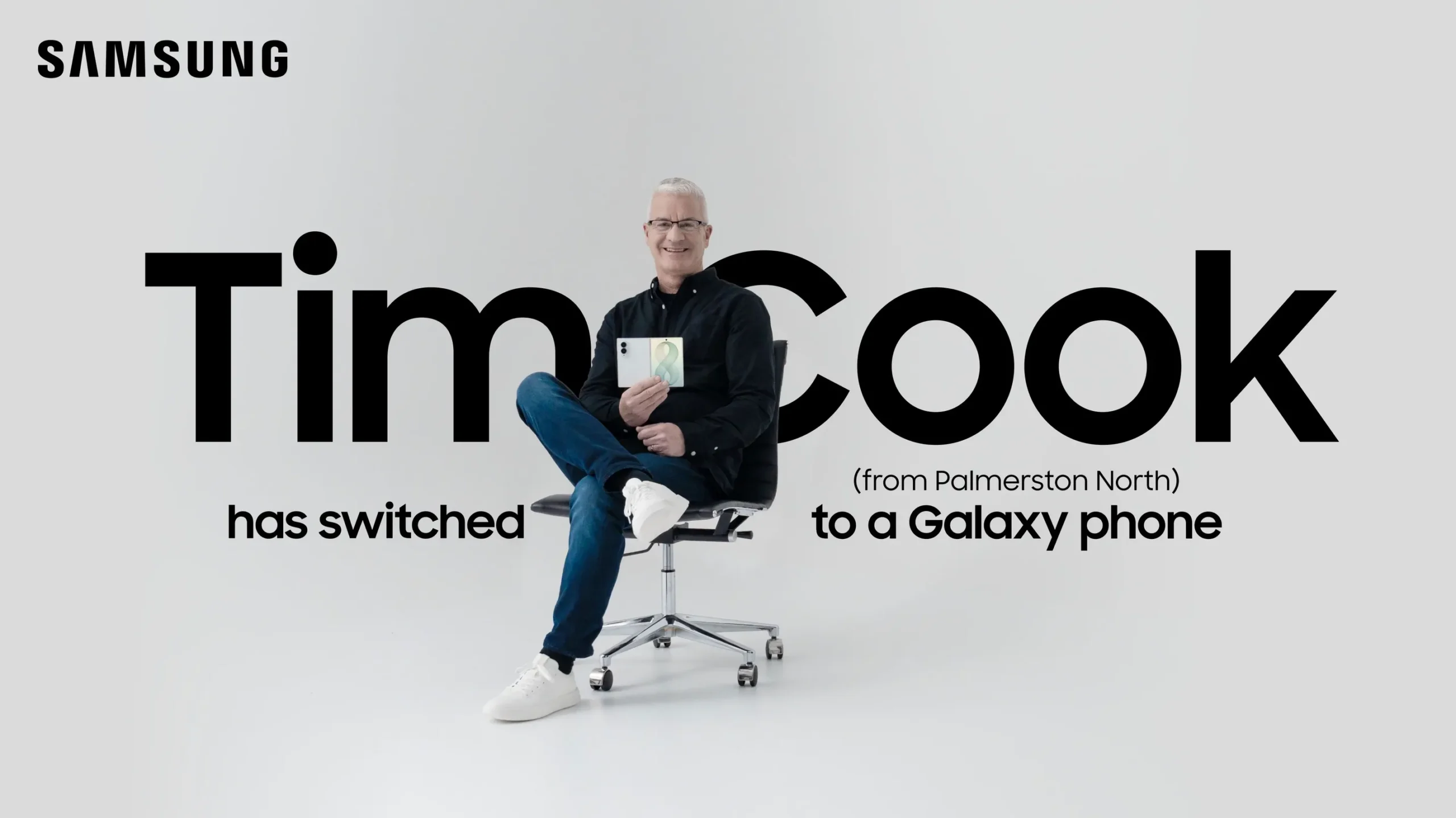
What I am, though, is a fan of good cheeky competitive marketing. And the best example of it I have seen in a long time came not from Apple, but from what I would argue is their biggest competitor. Forty-eight hours after Apple unveiled the iPhone Duo, a man named Tim Cook appeared on camera reviewing a Samsung phone, and it was one of the cheekiest pieces of competitive marketing I have seen in years.
What Samsung Actually Did
The “Tim Cook from Palmy” ad was part of a much larger campaign Samsung had clearly been preparing long before Apple took the stage. Samsung’s global team had already placed “Welcome to Foldables” billboards at Times Square, Piccadilly Circus, and Shibuya Crossing before Apple’s event even began, a not-so-subtle reminder of their seven-year head start in the category.
The Tim Cook ad was a separate execution, this one from Samsung New Zealand, and it launched the very next day with a line almost too good to be accidental. “Tim Cook has an announcement. And for the first time, it’s about Galaxy.” As someone who spent more than two decades in brand and marketing, I can tell you that kind of coordination does not happen by chance. It happens when a team has done the competitive homework properly, and perhaps with a little bit of coincidence, a property agent in Palmerston North that happens to share a name, and an almost uncanny resemblance with the most recognisable name in tech.
The pressure Samsung is facing is global, but nowhere is it more acute than in North America. To understand why Samsung came out swinging this hard, let’s dial back for a little context. Samsung has been making foldable phones since 2019, when it launched the original Galaxy Fold to a market that was equal parts curious and sceptical.
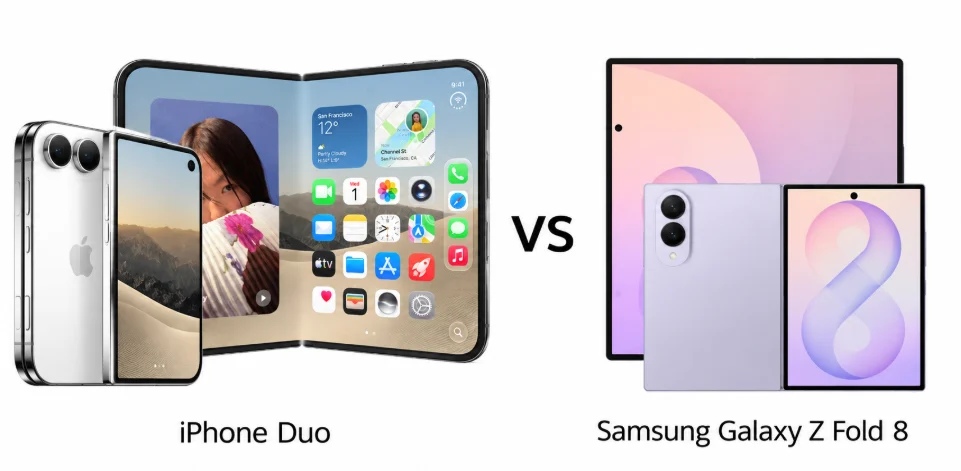
Seven years later, Apple finally entered the category with the iPhone Duo, and the forecasts are not comfortable reading for Samsung. According to Counterpoint Research, Apple could capture close to 46 percent of North American foldable market share in 2026 alone, pushing Samsung down from 51 percent to around 29 percent. That is not a gentle nudge. That is a category being reshaped in real time, and Samsung knows it. The numbers tell a North American story. The ad that got the world talking came from New Zealand. What you see in this campaign is a company that decided the best response to an existential competitive threat is not a spec sheet, but a story.
I teach marketing at a polytechnic, and when I saw this campaign unfold I found myself doing what I usually do in class when a good real-world example lands. I analyse it and marvel at the details. There are three things Samsung did here that show up repeatedly in competitive marketing theory, and each one is worth a shout out.
The Indirect Attack Works Better Than You Think
The instinct in a competitive situation is often to go head-on. More features, better specs, a louder claim. Samsung did none of that. What they executed is the indirect attack strategy, identifying and exploiting gaps in a competitor’s positioning rather than fighting them on their own terms.
Apple’s gap here was simple. They were late to foldables by seven years. Rather than debating screen resolution or camera specs, Samsung made lateness the entire story. The “Tim Cook” ad wasn’t about Samsung at all, really. It was about Apple’s timing, framed cleverly enough to travel extensively on social media without a cent of additional media spend. Indirect competitive marketing, done well, almost always outperforms a direct assault. Samsung never once said their phone was better. They just reminded everyone that Apple was seven years late to the party.
Time Your Move Around Their Moment, Not Yours
Competitor analysis teaches us to understand not just what rivals are doing, but when they are most exposed. Apple’s launch was simultaneously their biggest moment and their most vulnerable one. A new CEO was taking the stage for the first time. The iPhone Duo was generating enormous press. Every camera in tech was pointing at Cupertino.
Samsung understood this concentration of attention as an opportunity. By positioning their campaign to land before, during, and immediately after Apple’s event, they gate-crashed the conversation without buying a ticket. In competitive marketing, timing is strategy. Showing up when your competitor is loudest means you get heard too, and borrowed attention is often the most valuable kind. The “Welcome to Foldables” billboards did not need to say anything clever. The timing said it for them.
Engineer the Conversation, Don’t Wait for It
The “Tim Cook from Palmy” ad was never really about the ad itself. It was about what the ad would cause people to do next. Share it, quote it, screenshot it. This is a deliberate application of what consumer behaviour theory calls engineered word-of-mouth, designing content specifically to trigger social sharing rather than leaving virality to chance.
The ingredients were intentional. A real person with a famous name. A passing physical resemblance to the actual Tim Cook. Apple’s own production language turned gently on its head. And a tagline sharp enough to quote. Samsung didn’t hope the internet would pick it up. They built it so the internet had very little choice. What it earned in attention, reach, and conversation was worth far more than any media buy. If the idea of brands engineering these moments interests you, the Vaseline Baseline story is another good one to look at.
What Saumsung’s Competitive Marketing Taught Me About This
When I first came across this story, I was tickled. Then I watched it again from the lens of someone who spent years thinking about how brands compete at scale. This made me appreciate it far more on the second viewing. The best competitive marketing rarely looks like competition on the surface. It looks like wit, good timing, and a fun ad from a company that happens to be playing it very smart underneath. What they produced was disciplined, well-timed, and genuinely funny. In brand marketing, that combination almost always wins.
Whether this campaign is enough to hold the line is a different question, and one we probably will not be able to answer for another year or so. Because at the end of the day, this is still Apple’s first foldable. And for a lot of people, that alone might be reason enough to switch. Clever marketing can shift perception. It rarely stops a product people have already decided they want. Samsung knows this too, which is perhaps why Tim Cook from Palmy exists in the first place.