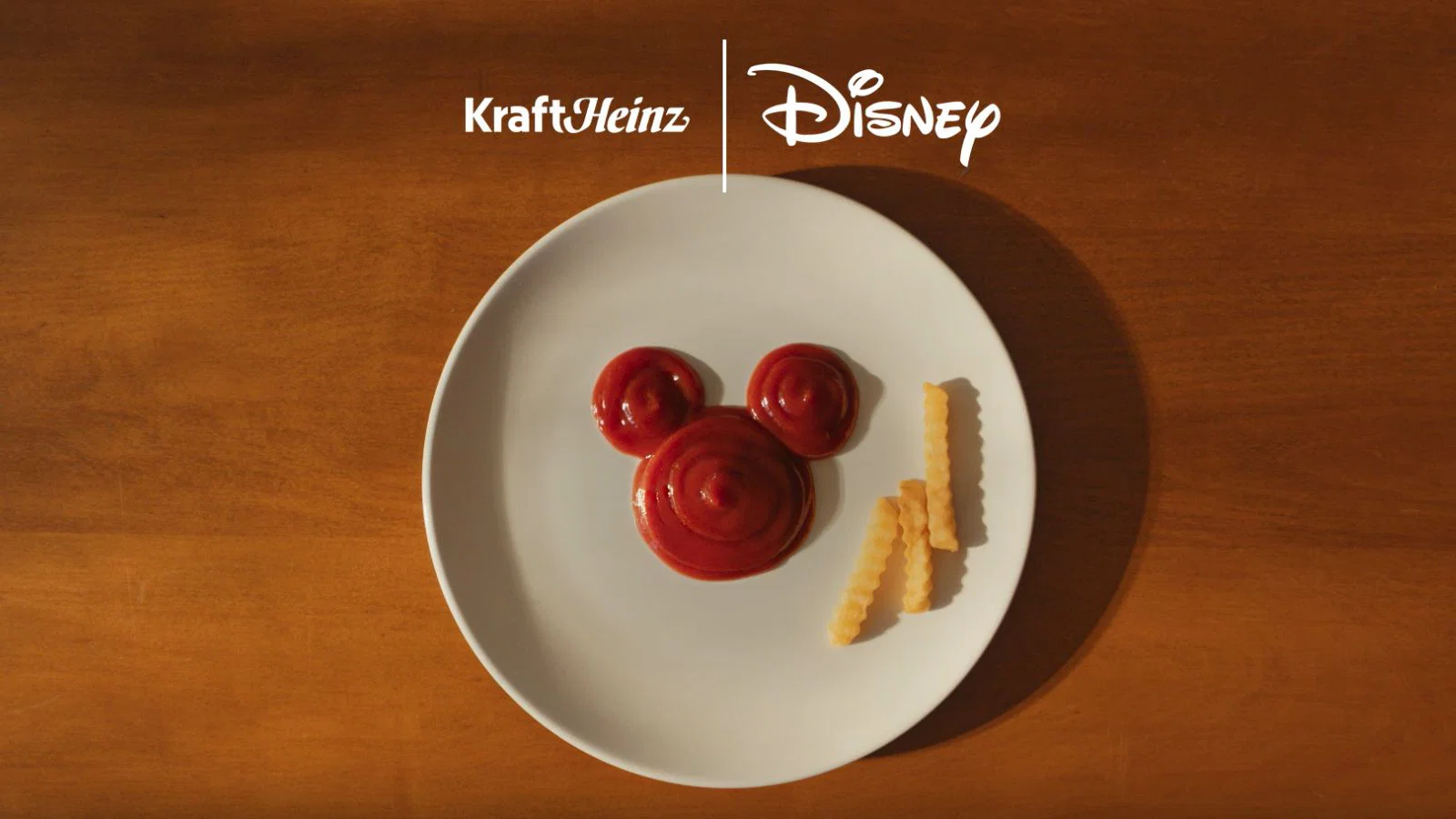
I have always loved a good brand collab. There is something genuinely exciting about watching two brands find a reason to show up together, especially when the pairing makes instinctive sense and both sides have something real to bring. Add to that the fact that I am a Disney fan through and through (after all I’m always a cast member at heart), and the Kraft Heinz Disney partnership announced this week had my attention. On the surface, it looks exactly like the kind of story I would cheer for.
Ten Kraft Heinz brands, including Heinz, Philadelphia, and Kraft Mac & Cheese, will roll out across Walt Disney World, Disneyland, Disney Cruise Line (wonder if it will be on the Disney Adventure), and Disney’s studios and streaming platforms in a multi-year strategic alliance. The studios and streaming piece is not incidental as Kraft Heinz is co-funding content that the two companies will develop together. That means Heinz brands have the potential to show up inside Disney films, shows, and digital content. This also means the partnership extends beyond the usual condiment station at the park.
New condiment stations on Main Street. Mac and cheese at Galaxy’s Edge. A presence at D23 in Anaheim this 14 to 16 August. On paper, it reads like a natural fit. But this is where I’ll need to be honest though. When I look at the fuller picture behind this deal, what I see is not really just a partnership announcement, even though it is. I saw it as a brand rescue story dressed up as one.
The Numbers Behind the Deal
To understand what Kraft Heinz is trying to do here, we’ll need to start with where the business actually is.
Organic sales fell 3.4% in 2025 and adjusted earnings dropped 15%. The company came into 2026 expecting further organic sales declines of between 1.5% and 3.5%. New CEO Steve Cahillane, who took over in January 2026, had arrived with a reputation for corporate breakups after leading Kellogg’s split and the sale of its snack business to Mars. He was widely expected to carve Kraft Heinz in two. Instead, after spending time inside the business, he scrapped the separation, called the company’s problems fixable, and pledged $600 million toward marketing, sales, research and development, and pricing. To fund it, around 1,000 jobs were cut.
The Disney deal looks to be the loudest expression yet of that strategy. And the market’s reaction told you something. Both Disney and Kraft Heinz shares edged lower in morning trade after the announcement. Investors were not convinced the equity transfer would flow fast enough to move the needle. I mean, have a little more faith, people.
That is the commercial context. Now for the more interesting marketing question.
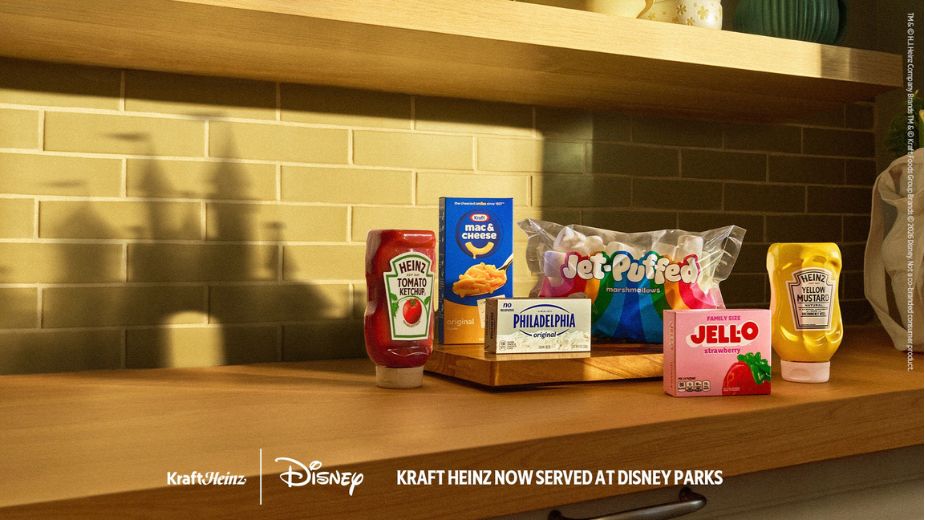
Two Century-Old Brands and the Kraft Heinz Disney Partnership
Heinz has been around since 1869. Its cornerstone products invoke warm nostalgic feelings for today’s consumers in much the same way as they did for their parents growing up. Disney has been around since 1923. It carefully curates experiences that appeal to multiple generations, with nostalgic strategies that invoke childhood memories while introducing new generations to beloved characters, creating a family-oriented cycle where parents share their love for Disney with their children, driving lifelong loyalty.
Neither of these brands needs an introduction. Both of them already live in people’s memories. And that is precisely the point.
When a brand can help create and tap into nostalgia, it creates an affinity that lasts for decades, generations even. Place two brands that both carry that kind of generational memory into the same physical moment, specifically a family holiday at a theme park or on a cruise ship, and what you get is not just brand association. You get compounding nostalgia. The parent who grew up with Heinz at the dinner table and Disney on the television is now sharing both with their children at Galaxy’s Edge. That is a genuinely powerful idea.
The challenge for Heinz, and why this deal is not simply about heritage, is that Heinz’s awareness remained high but its relevance had been declining, with its emotional connection eroding as consumers questioned the brand, partly driven by forced price increases. The emotional raw material is still there. What Kraft Heinz is trying to do is reactivate it, and Disney parks are probably one of the highest-leverage environments on earth to do exactly that.
Where the Equity Actually Flows
The standard view of co-branding is that two brands combine their strengths to reach a wider audience. The MoonSwatch is the textbook example, Omega’s prestige meeting Swatch’s accessibility, with the product itself as the collaboration. Coincidentally, the same week I taught that in class, Swatch and Audemars Piguet launched their own collab, the Royal Pop collection, to queues around the world. Could not have timed that better if I tried. Both sides brought genuine equity to the table, and neither was leaning on the other to prop up falling sales.
The Heinz and Disney arrangement is more layered. Disney is not a distressed brand. It had annual revenue of $94.4 billion in its fiscal year 2025. Kraft Heinz, as we have established, is mid-turnaround. So the question worth asking is whether Heinz is extending its own brand equity through this deal, or effectively leasing Disney’s positioning to shore up its own. That is not necessarily fatal as a strategy, but it does change what the deal can realistically deliver and over what timeline.
The collaboration will extend across Disney’s North American parks and resorts, Disney Cruise Line (still thinking about the Disney Adventure), and Disney’s studios and streaming platforms. That is a broad canvas. And the framing from both companies has been explicitly about family memory, everyday moments, and storytelling. That is a deliberate move up the brand positioning ladder, away from product attributes like taste and price, toward the deepest level of emotional connection. The question is whether you can sustain that positioning through a partner’s ecosystem, or whether it has to be rebuilt from within.
Brand Equity and Customer Equity Are Not the Same Thing
Brand equity is what consumers feel when they see your name. Customer equity is the actual financial value of customer relationships over time, measured in purchase behaviour, frequency, and retention. Kraft Heinz’s problem is that brand equity for Heinz ketchup remains reasonably strong, with the iconic red label and the “It Has to Be Heinz” slogan still carrying real weight in consumer consciousness. But customer equity is declining, because consumers are buying less. I explored this same dynamic in a different context when writing about how Meta’s Muse Image feature spent down customer equity in three days by treating users as raw material rather than customers.
The mechanism is different but the principle is the same. Brand equity and customer equity can move in opposite directions, and the gap between them is where trust either holds or breaks. Organic sales do not fall for nine consecutive quarters because people have stopped recognising the brand. They fall because people are choosing something else at the shelf.
A Disney partnership can do a great deal to strengthen emotional salience. It can put Heinz back in front of families at their most emotionally receptive moments. It can remind a parent who grew up squeezing that bottle that it belongs on the table again. What it cannot do, on its own, is change what ends up in the trolley at the supermarket. That requires the $600 million investment to land on product, price, and availability as much as it does on experience and storytelling.
The strategic logic here is coherent. The risk is one of timeline and sequencing. Kraft Heinz is running an expensive brand investment year while organic sales are still guided downward. If volumes keep sliding, the partnership becomes an expensive coat of paint on a house with foundation problems. If the curve bends by 2027 as Cahillane is betting, then this deal will look like exactly the right move, two iconic brands reinforcing each other at the right moment in a high-emotion environment.
Coming From My Lens
I think the emotional insight behind this deal is genuinely sound. Two brands that generations of families have grown up with, meeting in the one place where family memory is being made most intensely. That is the real connection.
What makes me cautious is the sequencing. You cannot brand-invest your way out of a volume problem if the fundamentals are not also being fixed. The Disney deal is the most visible part of Cahillane’s strategy, but it is not the strategy itself. The part that matters most, getting consumers to actually buy more Heinz, happens at the product and pricing level, long after the D23 activation photographs have faded.
For marketers, the lesson I take from this is an old one dressed in new clothes. Brand equity and customer equity are related, but they are not interchangeable. One tells you how people feel. The other tells you what they actually do. And in the end, the business runs on the second one.