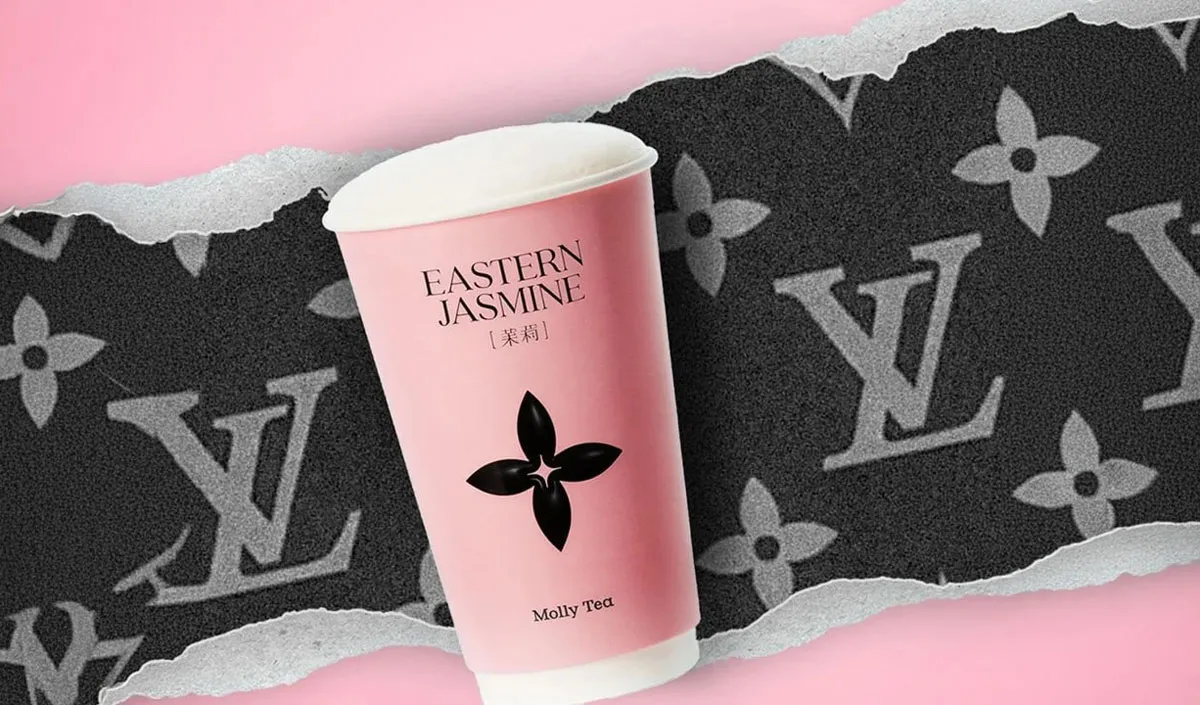
A few days ago, my wife and I were talking about Chinese culture, and somewhere in that conversation the Louis Vuitton and Molly Tea case came up. That made me go back and look at the story again. It has been two months since the Suzhou Intermediate People’s Court ordered Molly Tea to pay LV 10.3 million yuan in damages and costs.
By now, most of us know the story. A fast-growing Chinese tea chain, a French luxury house, a four-petal flower, and a ruling that was legally clear but culturally anything but. What happened after the gavel pounded turned out to be at least as interesting as the verdict itself, and honestly, what happens next might be even more so.
When the Cultural Environment Shifts Under Your Feet
I teach marketing, and one thing I always tell my students is that frameworks sound abstract until a real story lands in your lap and suddenly everything clicks. The cultural environment is one of those concepts. It shapes how consumers think, what they value, and how they react, and it does not pause just because a court has issued a ruling.
While the Suzhou court was looking at a trademark question, Chinese consumers were looking at something else entirely. Within days of the ruling going public, Molly Tea had picked up around 350,000 new followers on Douyin, according to Chinese media reports. The main Weibo topic drew some 400 million reads, cited by East Is Read from Chinese media monitoring data. A hashtag saying the tea chain had “lost the case but won the public’s heart” gathered more than 30 million views, per Fortune.
The reason the backlash spread so quickly wasn’t really about Molly Tea. Commentators and netizens pointed out that the symmetrical four-petal motif runs deep in Chinese decorative history. The baoxiang flower of the Tang Dynasty, a Buddhist decorative motif, appears on Dunhuang murals, silk textiles, bronze mirrors, the window lattices of Suzhou’s classical gardens, and rosewood pipa instruments dating back over a thousand years. The persimmon-calyx pattern carries similar roots. Widely shared images placed Molly Tea’s logo beside carvings on a Tang Dynasty pipa alongside LV’s monogram, and the question those images posed was obvious to anyone who saw them.
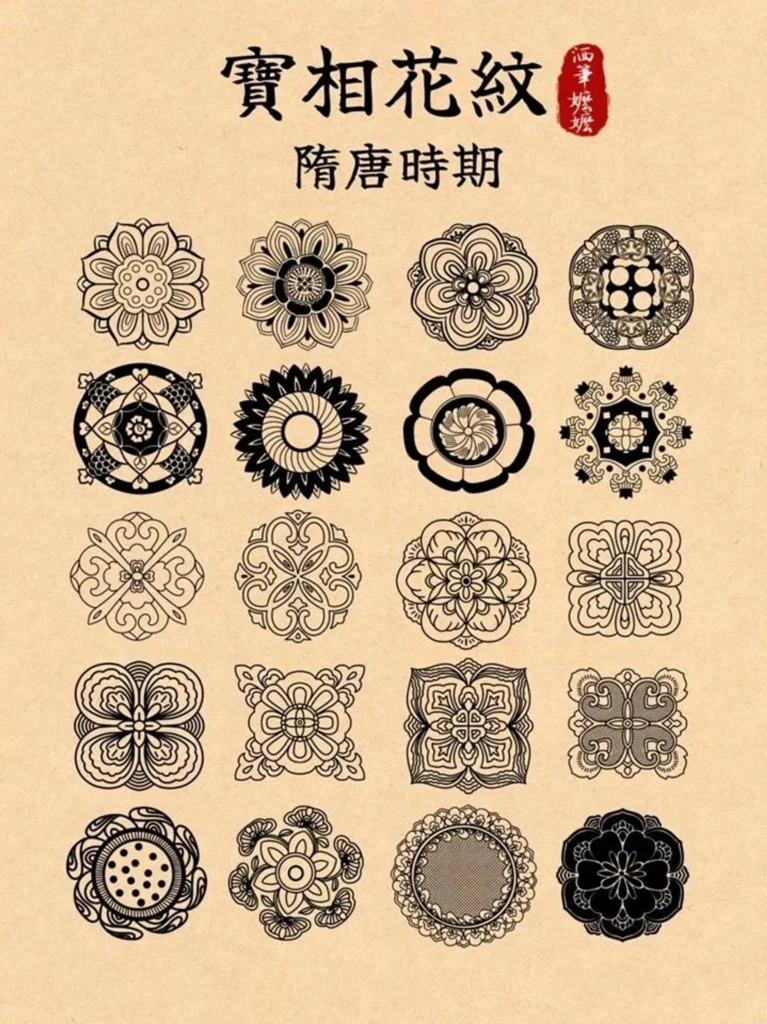
To be fair to LV, their position is that the monogram, designed in 1896, was inspired by neo-gothic ornamentation and Japonism, which LVMH has stated publicly. That is a reasonable account, and it is also worth noting that Japanese design traditions of that era were themselves shaped by cultural exchange with Tang Dynasty China centuries earlier.
The origins of a simple floral shape are hard to pin down cleanly, and legal commentators in China were quick to separate that historical question from the narrower one the court was actually deciding, which was whether Molly Tea’s logo was too close to a mark that LV had already registered. Under China’s first-to-file trademark system, LV’s rights were clear, and the court applied the law as written.
But here is the thing. The cultural environment does not operate on first-to-file logic. It operates on feeling. And the feeling that settled over this case was that a 130-year-old French monogram was being used to stop a domestic brand from using a pattern that many Chinese consumers regard as part of their own heritage. Global Times ran a headline stating that “Chinese netizens accuse LV of attempting to monopolise ancient motifs.” Beijing Daily posted on Weibo that the ruling exposed a gap in protections of ancient Chinese heritage and symbols. When state media picks up a sentiment and runs with it, the cultural environment has already moved. A court ruling is not going to move it back.
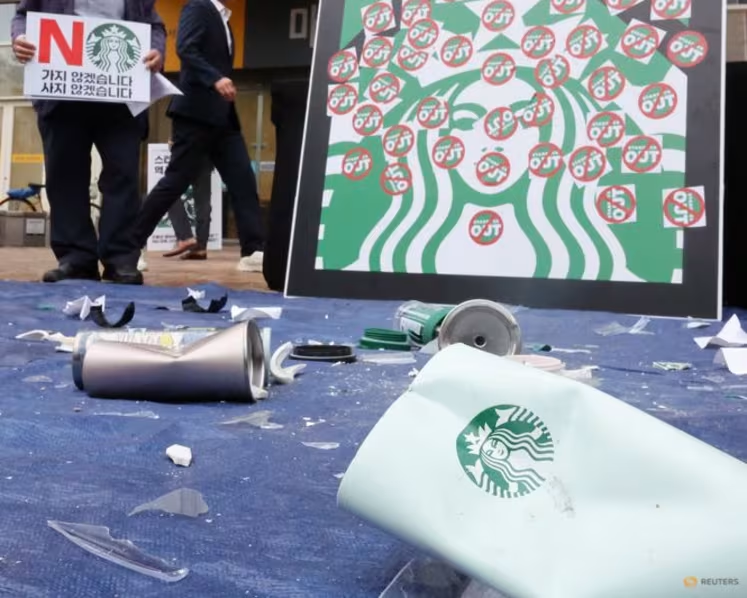
And look, this is not an isolated pattern. Earlier this year, Starbucks Korea launched a “Tank Day” promotion on 18 May, the anniversary of the 1980 Gwangju Uprising, a date that carries enormous historical weight for Korean consumers. The campaign was pulled, the CEO lost his job, and more than 2,000 stores across Korea closed for a day of mandatory historical awareness training. The product name was not offensive in isolation. It became offensive in context. I wrote about the cultural intelligence failure behind that case, and the parallel with the LV situation is too uncanny. Different markets, different triggers, same underlying gap between what a brand intended and what the cultural environment heard.
Brand Equity Lives in Esteem, and Esteem Is the Hardest Thing to Rebuild
When I think about brand value, one of the frameworks I come back to is brand equity across four dimensions, namely differentiation, relevance, knowledge, and esteem. Louis Vuitton had all four working in China for decades. The differentiation is obvious, the relevance to Chinese luxury consumers is well-established, and the brand knowledge is as high as it gets anywhere in the world. The esteem was built over generations.
What the backlash chipped away at was esteem, and that is the one you really cannot fix with a campaign or a product launch. Esteem builds slowly through consistent behaviour that aligns with what your consumers actually value. And it can fall faster than you expect when people decide a brand has acted against something they care about.
The LVMH H1 2026 earnings are something to look at here, though I want to be careful not to overread them. LVMH reported H1 2026 revenue of €38.64 billion, down 3% on a reported basis, with organic revenue up 2% year on year. Management described Chinese local and tourist demand as flat, spending concentrated around shopping events. But that softness predates the ruling entirely. The H1 period runs to June, and the backlash peaked in early July, so you cannot connect those dots in good conscience. What the H1 results do tell you is that LV was already in a fragile spot with Chinese consumers when all of this landed.
The secondary market has moved faster. Reports from Dewu and ZZER showed popular LV handbags trading below retail price in the weeks after the ruling, as cited by VnExpress. Secondary market pricing tends to move ahead of official figures because it reflects how people actually feel right now, not what the quarterly report will say three months later. It serves as a signal, not a verdict.
The Q3 earnings in October are where the real story will start to show up. That period covers July through September, the full arc of the backlash, the silence, the appeal, and whatever the secondary market has been doing in the background. If there is a commercial impact to report, that is where we will first see it.
Molly Tea Lost in Court. Here Is What It Did While the Ruling Was Still Fresh.
There is a useful distinction in marketing between reactive and proactive companies. Reactive ones wait for the storm to pass. Proactive ones move into the space the storm creates. What Molly Tea did in the weeks after the ruling is the perfect case study in the second approach, even if it was not entirely planned that way.
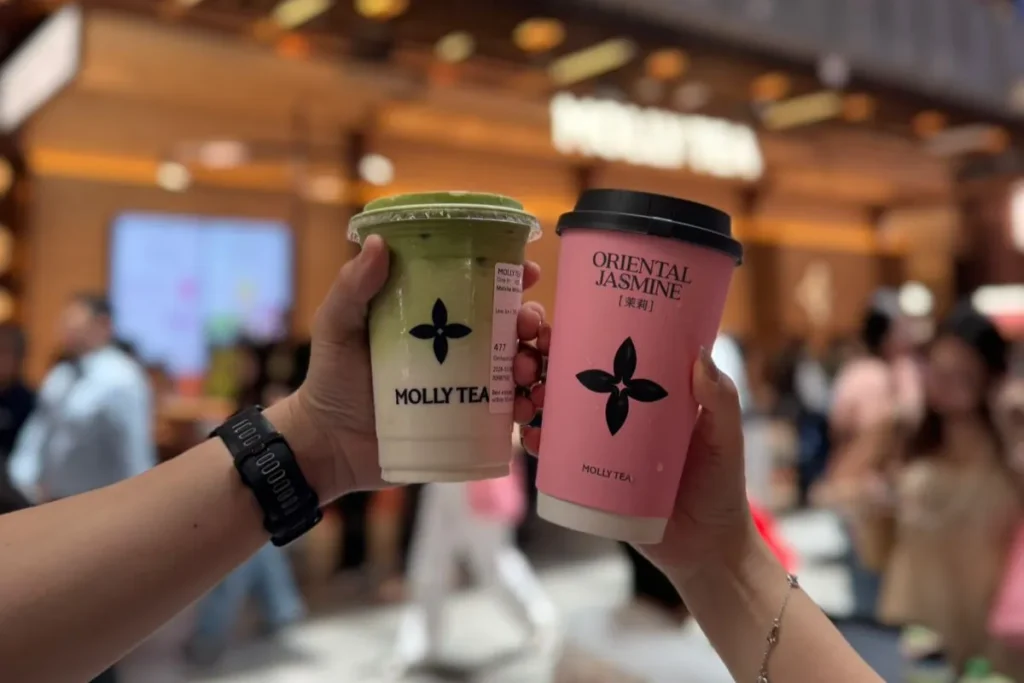
Molly Tea did not engineer becoming a cultural symbol. The public did that for them. But the brand moved quickly enough to reinforce the narrative without being cynical about it. On 6 July, the company announced a 1 million yuan donation to Hengzhou in Guangxi following Typhoon Maysak, becoming the first milk tea brand to launch a disaster relief initiative in the area. It was not framed as a response to Louis Vuitton, then again it didn’t need to. The timing placed Molly Tea squarely on the side of the community while the contrast with LV’s silence was still fresh in people’s minds.
LV’s Weibo and Xiaohongshu accounts had been posting regularly before the ruling. From 1 July, they went quiet. When LVMH addressed the case on its H1 earnings call, the statement was that the case is ongoing and the company declined further comment. I get why. It is a legally defensible position. But in China’s social media environment, silence during a cultural controversy does not read as restraint. It reads as indifference. And once you cede the narrative, it is very hard to get back.
That said, I think it is worth being clear-eyed about Molly Tea’s windfall too. The follower surge and the store queues are real, but they are also a moment, and moments pass. Sympathy is not the same as loyalty, and loyalty is what actually shows up in the books over time. There is also the small matter of Molly Tea navigating a franchise dispute in New York courts over its US operations at the same time all of this was happening. One brand, two courtrooms, two continents, same year. The public wave will carry it for a while. Whether what is underneath it is strong enough is a question only the next year or two will answer.
What H1 Said and What H2 Still Has to Answer
The H1 earnings gave us a baseline. LVMH revenue down 3% year on year, China demand flat against a low comparison period, cautious language from management about the second half. None of that is on Molly Tea. The China luxury slowdown has deeper structural causes, shifting consumer priorities, younger shoppers being more price-sensitive, the ongoing rise of Guochao domestic brands, and a broader rethink among Chinese consumers about what luxury even means to them now.
What H2 adds is the Molly Tea variable. The backlash ran through July and into August. The appeal keeps the story alive in Chinese media. The secondary market softness, if it holds, will eventually show up in reported figures. And the silence from LV’s social channels is a question that gets harder to ignore the longer it continues.
LVMH Q3 results land in October. That will be the first earnings period where analysts can legitimately press on whether the cultural backlash moved the needle on brand sentiment in China. They will ask. And the answer will matter not just for LVMH but for every foreign brand with a significant China presence, operating in a market where cultural issues remain highly combustible even as retail nationalism has cooled, as FashionNetwork noted.
Lest we forget, the D&G case from 2018 might be the clearest precedent anyone can point to. It started with a promotional video showing a Chinese model, Zuo Ye, attempting to eat Italian food with chopsticks, set to a patronising Mandarin voiceover. Many Chinese consumers found it condescending and stereotypical, and the backlash was immediate.
Then, on the day of the planned Shanghai show, screenshots of co-founder Stefano Gabbana’s derogatory private Instagram messages about China leaked via fashion watchdog Diet Prada. D&G was pulled from Tmall, JD.com, and every major Chinese e-commerce platform almost overnight, and the brand spent the better part of five years trying to rebuild what it lost. The nature of LV’s situation is different, but the cultural nerve that was struck is not entirely dissimilar, and the D&G timeline gives a sense of how patient that recovery has to be.
The collateral damage is worth noting too. Zuo Ye later said the controversy nearly ended her career. She felt guilty and ashamed, even though she had no creative control over how the videos were made or how they landed. Cultural missteps at that scale do not just cost the brand. They cost the people caught in between.
For marketers across Asia, I think the Molly Tea case is less about whether LV was right to protect its IP, which it clearly was within the law, and more about the gap that opens up when legal strategy and brand strategy are not in the same conversation. That gap is manageable when the cultural environment is stable. When it shifts, you tend to find out in the next earnings call.